

|

|

Sign up for our newsletter to receive the latest news and information from publics.bg


Interviews


 24.06.2011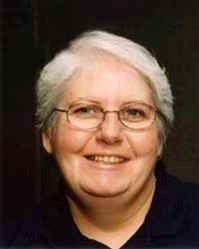
Ms Boggess, what were the main reasons for founding the organization “Women in Nuclear Global” (WiN Global)?
- When Three Mile Island and Chernobyl events happened, what the industry found, was that both of these topics were perceived in a very emotional way. The science and the logic behind the matter were lost and the emotional reactions to “what is nuclear” took place. What the industry found was that if you do statistical studies, if there is an emotional issue, 70% of people will believe a woman as opposed to a man - if their credentials, their words, everything is the same. If it is about science, the percentage is the opposite - people will believe the man and not the woman. Our founders said “we have people that are scientifically prepared to present the facts, to communicate on emotional level”. So they decided to let women communicate on emotional issues. And the industry started promoting women as communicators. Nuclear technology is sound, so the only thing needed was to communicate.
The European Nuclear Society (ENS) was the major sponsor in starting WiN and then for many years. In 1993 they officially chartered Women in Nuclear (WiN). That was under the sponsorship of the ENS. We have grown from 10 countries in the beginning - mostly European, with Canada and the USA. Japan, Taiwan, and South Korea got involved later, and we have grown since then even more.
Which other countries would you like to have as members of WiN Global?
- Our organization is looking for the countries which use nuclear technology - not just nuclear power. There is medicine, communication, research - so many things that people do not realize nuclear technology is useful for. We would like to have a chapter everywhere that nuclear technologies are used. We need to communicate the facts, to keep people aware of what we are developing.
We have tried to strategically focus on countries with reactors - for power generation, research, or medical isotopes generation. We would like to include also countries which are trying to introduce nuclear technologies. Many countries would like to have their own technologies. That is a big undertaking.
What are the main successful stories of WiN Global for the past 18 years?
- If you look at where we started - with small numbers in Europe - we have grown with members in over 80 countries, having on a global level almost 4000 members. But you have to consider that not every member of WiN in their local chapters is member of WiN Global. For example - in the USA, we have 4500 members of the national WiN association. Of them, less than a thousand are members of the international organization WiN Global. The reason is that the WiN outreach is at local level. I firmly believe that WiN will connect with the public, which is our vision, on a local level. It is more important for the foundation to be there than to have a huge number of global members. Because our issues are local, education in schools is local, in the neighborhood. That is where I believe WiN should be.
The language of WiN Global is English, but this is not the language of most members. So most local members are not in the global organization, but they are WiN-ners. They fulfill the goals of the organization at a local level.
Something else - WiN is not only women. We address women because of the emotional reaction, but there are many men, that are members of WiN. The membership is not restricted. It is just that the scientific community does not reach the talent that is in women and young girls. That is one of our actions.
What types of educational initiatives are usually done by WiN organizations?
- We are everywhere. We reach the very old, the very young, we are in skills trades, research. There is not an educational restriction for membership. In fact, the more people from diverse background come to us, the better we will become in using nuclear technology.
Do you think that there is a lack of enough trained specialists for the nuclear sector?
- I think you need young people in every sector, but we have an energy, medical, and research need. You cannot have a medical isotope without all the pieces working together. Look at our conference: you see both older and younger WiN-ners. Where else would you see such dichotomy of generations - sitting down and sharing the same mission, vision, etc. This is equality, which is not usual for all scientific communities. We have CEOs, heads of corporations, heads of small and large companies.
Fukushima Daiichi NPP was one of the focuses of your conference. What will now be the role of WiN Global after this event?
- I think the role of our organization will be more important, because we go out to the community. Ms Junko Ogawa, one of the speakers at our conference in Bulgaria, was the key spokesperson for the event in Japan. The members of WiN Japan have established credibility in the communities. They have already started - they are going back to their communities and talk to them. They have little groups, outreaches, they talk to people. That is critically important.
When the events happened in Japan, I was very disappointed. We forgot the real event in light of the nuclear media frenzy. There was such a tragedy - the Japanese people had an unheard of event. When you look at what happened in the country - 14 meters of water coming - and the effort of the Japanese people to respond: there was no looting, no stealing, there was helping. They took care of the people. We were so messed in this nuclear science. People’s response is remarkable. And the mere fact that the workers there did not allow a disaster speaks to their preparedness and speaks to the safety culture that is nuclear. They used all of the technology at their disposal and that plant is standing today. Anybody that does not applaud this is misplaced, I think.
What outcomes do you expect from the 19th WiN Global conference, that took place in Bulgaria this year?
- Bulgaria welcomed 23 countries from all over the world. The team at WiN Bulgaria welcomed us, made us comfortable. We had lots of talking, many new friends. Their activities are remarkable. I could import what they are doing to my country and vice versa. It is a very nice place. We are very busy people and we stopped and talked - that is not something that happens all the time. I think that was a good conference, the plant tour at NPP Kozloduy was great. We are networking. I have met people in WiN that I would have never met otherwise. Their walks of life are so different and we became friends, we broke the barriers and connected person-to-person.
This year you shared your WiN formula with the members of the organization. Could you share it with our readers as well?
- I mark what WiN does with the following formula: Е=m.c^2. It means, that “WiN Engages the Public with a Message that Connects and Communicates”.
____________________
Mrs Cheryl Boggess is a Senior Project Manager and Principal Engineer with Westinghouse Electric Company, LLC. Mrs. Boggess has over 28 years of engineering experience in the commercial nuclear power industry. Areas of focus have included piping and structural analysis, new plant design, plant modifications, probabilistic fracture mechanics, risk-informed applications, and component aging management.
In addition to being the principal analyst for the primary loop piping she was the technical lead, interacting with domestic and international partners, in the design and qualification of the Westinghouse AP600 primary pressure boundary piping.
Mrs. Boggess has contributed in the development of ASME Code Cases and is an author of numerous topical reports and technical papers. Her current efforts involve component aging and asset management issues focusing on pressurized water reactor vessel internals.
Mrs. Boggess is the founding Chair of the Westinghouse Pittsburgh Chapter of US WIN, served on the US WIN Strategic Planning Committee and as the US Representative to the WIN Global Board prior to her election as WIN Global President.
 All interviews
 Interview
 Full text
 Events


