Publications Bookmark and Share

14.02.2012
EU: Shale gas extraction is well regulated
A recent report published by the European Commision concludes that current regulations and local legal framework regulate well enough the current state of shale gas exploration and extraction
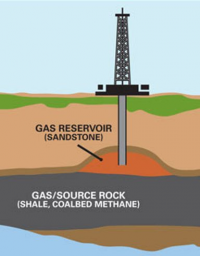
AUTHOR: publics.bg
There is no need for more environmental legislation in the case of shale gas exploration, at least until it reaches commercial scale. This is the conclusion of a recent study published by the European Commission on January 27.
 
The report carried out for the European Commission by Belgian law firm Philippe & Partners concentrates on four member-states, namely Sweden France, Poland and Germany. These countries were selected because they are more or less ahead of the others in terms of shale gas exploration. In end-2011 Polish PM Donald Tusk announced that the country would start commercial shale extraction in 2014 in order to decrease its dependency on gas imports from Russia.
 
Following recent public concern about the environmental impact of shale gas exploration, the report concludes that activities relating to exploration are already subject to EU and national laws and regulations.
Water protection issues, for instance, which have been raised as an issue by shale gas detractors, are already covered by EU legislation under the Water Framework Directive, the Groundwater Directive and the Mining Waste Directive. Meanwhile, the use of chemicals is covered by the REACH regulation, the study says.
“It is a new technology and we do not have a specific legislation on shale gas, because it is so new," said Marlene Holzner, European Commission spokesperson on energy.
 
The law firm said shale gas activities were too small at the moment to justify specific legislation. “Neither on the European level nor on the national level have we noticed significant gaps in the current legislative framework, when it comes to regulating the current level of shale gas activities,” the study reads.
 
The assessment, however, refers only to the current scale of operations in Europe. Shale gas exploitation on a commercial scale would involve bigger maneuvers and most definitely would require further regulation.
 
Nevertheless, this does not concern Bulgaria, even though the EU regulations mentioned in the report have already been transferred to the Bulgarian legislation. As thousands of citizens protested against shale gas ventures over fears of water poisoning and health hazards, the government voted the ban of exploration and commercial extraction for an indefinite period.


No published comments
Login to comment


Interview

20.03.2022  Teodor Bobochikov, Managing Partner, V-Ridium
Energy Transformation – Trends and drivers
Full text

Events

No records in this category!

Poll

What kind of transport do you use to get to work?


We use cookies to ensure we give you the best browsing experience on our website. Find out more on how we use cookies and how you can change your settings.

Cookies

What are cookies ?

A cookie is a small text file that a website saves on your computer or mobile device when you visit the site. Cookies are widely used in order to make websites work, or work more efficiently, as well as to provide information to the owners of the site.

How do we use cookies?

Website use Google Analytics, a web analytics service provided by Google, Inc. ("Google") to help analyse the use of this website. For this purpose, Google Analytics uses"cookies", which are text files placed on your computer.

The information generated by the cookies about your use of this website - standard internet log information (including your IP address) and visitor behaviour information in an anonymous form - will be transmitted to and stored by Google including on servers in the United States. Google will anonymize the information sent by removing the last octet of your IP address prior to its storage.

According to Google Analytics terms of service, Google will use this information for the purpose of evaluating your use of the website and compiling reports on website activity.

We not use, and not allow any third party to use the statistical analytics tool to track or to collect any personally identifiable information of visitors to this site. Google may transfer the information collected by Google Analytics to third parties where required to do so by law, or where such third parties process the information on Google`s behalf.

According to Google Analytics terms of service, Google will not associate your IP address with any other data held by Google.

You may refuse the use of Google Analytics cookies by downloading and installing Google Analytics Opt-out Browser Add-on. The add-on communicates with the Google Analytics JavaScript (ga.js) to indicate that information about the website visit should not be sent to Google Analytics.

Cookies are also used to record if you have agreed (or not) to our use of cookies on this site, so that you are not asked the question every time you visit the site.

Google Analytics Opt-out Browser Add-on

How to control cookies?

You can control and/or delete cookies as you wish. You can delete all cookies that are already on your computer and you can set most browsers to prevent them from being placed.

All about cookies

Managing cookies in your browser

Most browsers allow you to:
  • see what cookies you have got and delete them on an individual basis
  • block third party cookies
  • block cookies from particular sites
  • block all cookies from being set
  • delete all cookies when you close your browser

If you chose to delete cookies, you should be aware that any preferences will be lost. Also, if you block cookies completely many websites (including ours) will not work properly and webcasts will not work at all. For these reasons, we do not recommend turning cookies off when using our webcasting services.
X
} catch(err) {}