

|

|

Online Newsletter
Sign up for our newsletter to receive the latest news and information from publics.bg
Sign up for our newsletter to receive the latest news and information from publics.bg


News
World news


 25.01.2013 16:05
Ukraine Signs Landmark Shale Gas Deal with Shell
Ukraine is said to have Europe's third-largest shale gas reserves at 1.2 trillion cubic m, according to the U.S. Energy Information Administration
© SkyTruth@flickr.com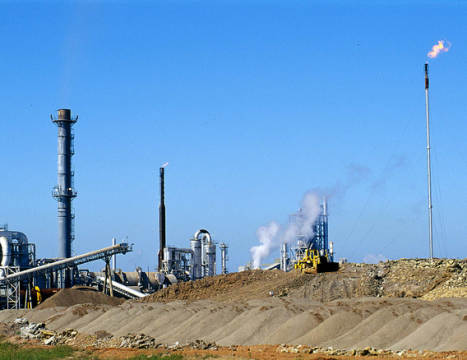
Ukraine took its first major step away from dependency on Russian gas imports on Thursday when it signed a USD 10 billion shale gas deal with Royal Dutch Shell, Reuters reported.
The 50-year production sharing agreement, signed on the sidelines of the World Economic Forum in Davos, marks the biggest contract yet to tap shale gas in Europe and the largest foreign investment in the former Soviet republic.
Disputes between Kiev and Moscow seriously disrupted Russian gas flows via Ukraine in 2006 and 2009, with European Union members Bulgaria and Slovakia left without energy in the depths of winter.
They remain at odds over the terms of a 2009 Russian supply deal brokered by former prime minister Yulia Tymoshenko, for which she is serving a jail sentence.
President Viktor Yanukovich presided over the signing between Shell's Chief Executive Peter Voser and new Fuel Minister Eduard Stavitsky. "We have witnessed a great event today. I believe we have become almost relatives," Yanukovich told Voser, as quoted by Reuters.
Ukraine chose Shell last May as a partner to develop the Yuzivska field in the east of the country and regional councils there approved the production-sharing deal last week, removing the last hurdle to signature.
Ukraine is said to have Europe's third-largest shale gas reserves at 1.2 trillion cubic m, according to the U.S. Energy Information Administration.
Poland too is looking to tap shale to reduce its Russian gas imports, though a massive downward revision in its estimated reserves and a decision by U.S. major ExxonMobil to halt exploration have dashed initial hopes for Europe's most ambitious shale exponent.
Production in Ukraine is several years off and will depend on results from 15 test wells.
The Yuzivska field could be producing 20 billion cubic m of gas in 2018, Stavitsky said on Thursday.
"According to Shell's optimistic scenario about 20 billion cubic m could be extracted annually; according to the pessimistic one, at the very least 7-8 billion," Stavitsky, quoted by Interfax, said in Davos.
Ukrainian officials said earlier this month that Shell saw investment under the deal of at least USD 10 billion "under the most likely scenario" and possibly as much as USD 50 billion.
Shell, which has projects worth many billions of dollars in Russia, did not comment on the figures and was less outspoken about Ukraine's dependence on Russian gas.
 All world news
No published comments
Login to comment
 Interview
 Full text
 Events


