

|

|

Online Newsletter
Sign up for our newsletter to receive the latest news and information from publics.bg
Sign up for our newsletter to receive the latest news and information from publics.bg


News
World news


 10.12.2012 12:53
Estonia Denied Nord Stream Exploration Request
The government said that this work risked revealing sensitive information about the nation’s natural resources and ways of utilizing them, and would also involve drilling and the use of explosives on the continental shelf and the dumping of noxious substances into the sea
© Nord Stram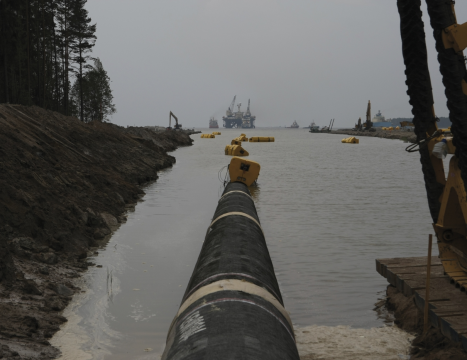
Last week Estonia denied Nord Stream’s request to study areas of the Baltic Sea bed falling within the nation’s commercial waters, the Estonian government's press service said, as quoted by RIA Novosti.
In August, the pipeline’s operator requested official permission from the Estonian government to explore a four-kilometer corridor of the seabed, with a view to building a third and possibly fourth line.
The government said that this work risked revealing sensitive information about the nation’s natural resources and ways of utilizing them, and would also involve drilling and the use of explosives on the continental shelf and the dumping of noxious substances into the sea.
Nord Stream’s twin 1,224-kilometer pipelines run along the Baltic Sea bed from Portovaya Bay in Russia to Lubmin on Germany's Baltic Sea coast, with an annual capacity of 27.5 billion cubic meters of gas.
When fully operational, the integrated twin pipeline system will have the capacity to transport 55 bcm of gas a year from Russia's massive gas fields to the European Union, the operator said.
Last week Estonia denied Nord Stream’s request to study areas of the Baltic Sea bed falling within the nation’s commercial waters, the Estonian government's press service said, as quoted by RIA Novosti.
In August, the pipeline’s operator requested official permission from the Estonian government to explore a four-kilometer corridor of the seabed, with a view to building a third and possibly fourth line.
The government said that this work risked revealing sensitive information about the nation’s natural resources and ways of utilizing them, and would also involve drilling and the use of explosives on the continental shelf and the dumping of noxious substances into the sea.
Nord Stream’s twin 1,224-kilometer pipelines run along the Baltic Sea bed from Portovaya Bay in Russia to Lubmin on Germany's Baltic Sea coast, with an annual capacity of 27.5 billion cubic meters of gas.
When fully operational, the integrated twin pipeline system will have the capacity to transport 55 bcm of gas a year from Russia's massive gas fields to the European Union, the operator said.
 All world news
No published comments
Login to comment
 Interview
 Full text
 Events


