

|

|

Online Newsletter
Sign up for our newsletter to receive the latest news and information from publics.bg
Sign up for our newsletter to receive the latest news and information from publics.bg


News
World news


 26.07.2012 15:37
EU Commission Presents Plan to Boost Carbon Market
What we have been saying is that the surplus is up to 1.4 billion, but I understand from the technical experts we have to have certain room. You cannot eat up all the flexibility in the system, so 1.2 billion as far as they can see, that's probably the maximum, Climate Commissioner Connie Hedegaard said
© European Parliament@flickr.com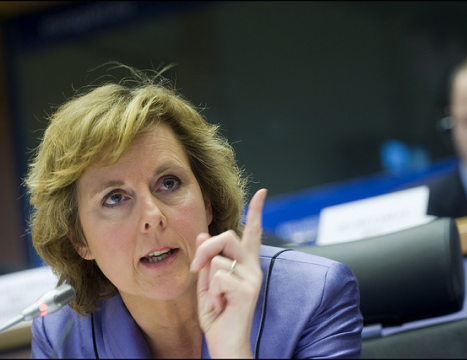
The European Commission presented keenly awaited plans to bolster the Emissions Trading Scheme (ETS) by reducing a massive burden of surplus allowances and urged member states to hurry them through by the year-end.
The proposals are the latest in a series of efforts to fix a market designed to be the mainstay of the EU's climate policy.
In the past it has been undermined by scams. Now it is over-supplied by millions of allowances because of recession.
"The EU ETS has a growing surplus of allowances built up over the last few years. It is not wise to deliberately continue to flood a market that is already over-supplied," Climate Commissioner Connie Hedegaard said, as reported by Reuters.
In April the price of carbon fell to a record low of 5.99 euros a tonne, far below levels needed to spur low-carbon investment and discourage pollution.
On Wednesday, the market dropped back below 7 euros, falling around 5 percent from the previous close.
To tackle the surplus, the Commission, the EU's executive, has decided on a series of steps, which it hopes can offer a solution in time for the next phase of the ETS, beginning 2013.
They include delaying the auction of new allowances and clarifying an article of EU law on auction time-tabling.
There are no firm numbers in the Commission's draft proposal, although a Commission analysis presents three options - withholding 400 million, 900 million or 1.2 billion allowances over the first three years of the market's next phase.
"What we have been saying is that the surplus is up to 1.4 billion, but I understand from the technical experts we have to have certain room. You cannot eat up all the flexibility in the system, so 1.2 billion as far as they can see, that's probably the maximum," Hedegaard said.
After the Commission's summer break, the outline proposal and analysis will be debated by officials from all member states at a meeting of the Climate Change Committee on Sept. 19.
 All world news
No published comments
Login to comment
 Interview
 Full text
 Events


