

|

|

Online Newsletter
Sign up for our newsletter to receive the latest news and information from publics.bg
Sign up for our newsletter to receive the latest news and information from publics.bg


News
World news


 04.05.2012 11:56
Japan's Last Nuclear Reactor to Close Saturday
Some of Japan's older reactors, or those situated in the most earthquake-prone spots, may never get approval to restart, while widespread distrust of the country's nuclear regulators and operators is threatening to derail or delay plans to bring even the newest units back online
© IAEA Imagebank@flickr.com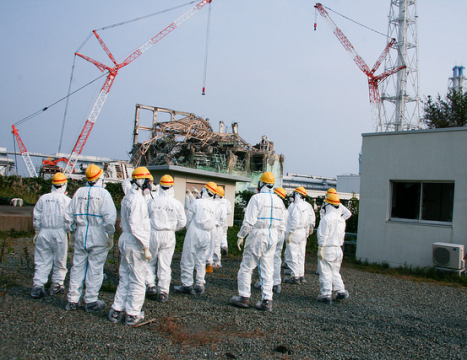
Japan's last running nuclear reactor is scheduled to go dark on Saturday, marking an extraordinary turnaround for a country that just over a year ago was one of the world's most eager proponents of atomic energy.
The complete shutdown of the country's 50-strong reactor fleet leaves Japan without nuclear power for the first time since 1966, in a stark demonstration of how severely last year's devastating accident in Fukushima has shaken the public trust.
It is unclear how long the nukeless moment will last: Most of the country's reactors had been halted for routine maintenance, but then left offline while their safety was reviewed. The Japanese government is pushing hard to restart two units in western Japan before energy demand peaks in the summer, warning of power shortages if all the reactors, which produced roughly 30% of the country's electricity, stay offline.
Still, both proponents and opponents of nuclear power agree that Japan has seen a sea change in sentiment since the meltdown of three reactors at Fukushima Daiichi blew radioactive particles over much of the northeast and forced the evacuation of about 150,000 people.
"There is no clear nuclear-energy policy now,'' says Tetsuya Endo, a former diplomat who has held top posts at nuclear organizations such as the International Atomic Energy Agency and Japan's Atomic Energy Commission, as quoted by the Wall Street Journal. "We're at a turning point.''
Before the accident, Japanese energy policy called for a "nuclear-powered nation'' that encouraged the funding of new reactors and that planned as much as 40% of its electricity from atomic energy by 2030.
The energy agency listed five reasons for "why nuclear energy is necessary''—from the scarcity of domestic energy sources, which supply only 4% of demand, to the cutthroat global "competition for resources.''
Post Fukushima, the agency pulled that nuclear-energy policy from its website, and the government says it is hoping to come up with a new one this summer. Japan's ruling party has said it now aims to reduce the country's dependence on nuclear energy.
Some of Japan's older reactors, or those situated in the most earthquake-prone spots, may never get approval to restart, while widespread distrust of the country's nuclear regulators and operators is threatening to derail or delay plans to bring even the newest units back online.
 All world news
No published comments
Login to comment
 Interview
 Full text
 Events


