

|

|

Online Newsletter
Sign up for our newsletter to receive the latest news and information from publics.bg
Sign up for our newsletter to receive the latest news and information from publics.bg


News
World news


 08.12.2011 11:57
Tepco May Dump Decontaminated Water from Fukushima into Sea
Tepco said it was still assessing the potential environmental impact of releasing the accumulating water, but that if forced to do so, it would discharge water expected to have the least effect on the environment
© IAEA Imagebank@flickr.com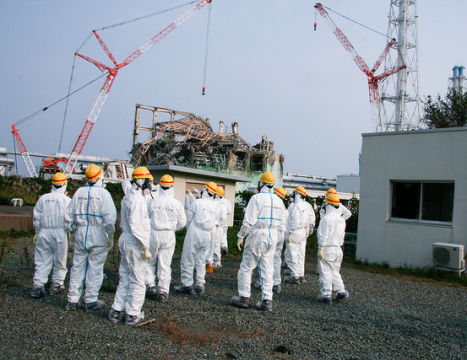
The operator of Japan's crippled Fukushima nuclear power plant is considering dumping water it treated for radiation contamination into the ocean as early as March, the firm said on Thursday, prompting protests from fishing groups.
Tokyo Electric Power, (Tepco) the utility operating Fukushima's Daiichi plant, hit by a powerful tsunami in March that caused the world's worst nuclear accident in 25 years, said it was running out of space to store some of the water it treated at the plant, due to an inflow of groundwater.
"We would like to increase the number of tanks to accommodate the water but it will be difficult to do so indefinitely," Tepco spokesman Junichi Matsumoto said, quoted by Reuters.
He said the plant was likely to reach its storage capacity of about 155,000 tons around March.
Tepco plans to come up with possible ways to handle radioactive waste and present its proposals to "The government should not, and must not, approve a plan allowing Tepco to dispose treated water in the ocean," said Kenji Sumita, an emeritus professor at Osaka University who specializes in nuclear engineering.
"The reality is that semipermanent storage is the only solution available under current technological constraints. Tepco may have to find the storage space and look for a technological breakthrough in the coming years that allows it to condense and greatly reduce the volume of tainted water."
The admission is a setback for the utility, which appeared to be making progress in its cleanup after building a cooling system that no longer required pumping in vast amounts of water. It also built a system, drawing on French, U.S. and Japanese technology, that decontaminates the vast pool of tainted runoff to supply the cooling system with water.
The company said representatives of a nationwide federation of fishing cooperatives on Thursday visited its Tokyo headquarters to protest.
Tepco said it was still assessing the potential environmental impact of releasing the accumulating water, but that if forced to do so, it would discharge water expected to have the least effect on the environment.
Tens of thousands of tons of water contaminated with radiation have accumulated at the plant, 240 kilometers (150 miles) northeast of Tokyo after Tepco, early in the crisis, tried to cool reactors that suffered nuclear fuel meltdowns by pouring in water, much of it from the sea.
"Our priority is also to look for ways to limit the inflow of groundwater into the buildings at the plant," Matsumoto said.
The operator estimates that due to the inflow the amount of water requiring storage is increasing by 200 to 500 tons every day.
The utility released more than 10,000 tons of water tainted with low levels of radiation in April to free up space for water with much higher levels of radioactivity, drawing sharp criticism from neighbors such as South Korea and China.
 All world news
No published comments
Login to comment
 Interview
 Full text
 Events


