

|

|

Online Newsletter
Sign up for our newsletter to receive the latest news and information from publics.bg
Sign up for our newsletter to receive the latest news and information from publics.bg


News
World news


 05.12.2011 16:42
Romania to Get Shale Gas Regulations
Its shale gas industry is still at an early stage and legal obstacles around environmental and property rights could stall the industry's development, NAMR President Alexandru Patruti said, according to Reuters.
© SkyTruth@flickr.com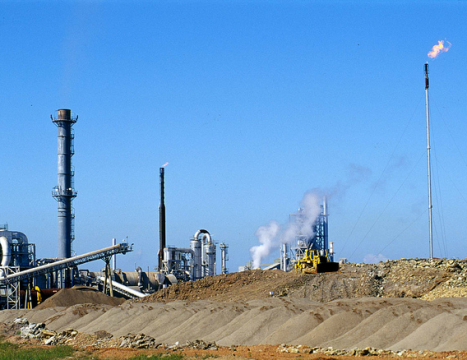
Romania needs laws to regulate the creation of a shale gas sector which the government aims to develop to offset dwindling conventional gas resources, the president of Romania's Mineral Resources Agency (NAMR) said, according to a report.
Romania could run out of conventional gas reserves as soon as 2022 and needs to come up with new resources, according to Romania's national statistics office.
Its shale gas industry is still at an early stage and legal obstacles around environmental and property rights could stall the industry's development, NAMR President Alexandru Patruti said, according to Reuters.
Romania currently has no specific legislation for shale gas exploration and uses the same laws that apply to its conventional gas sector.
"Shale gas exploration implies the use of enormous quantities of chemicals and water. These will have to be transported and stored, and I can see some legal issues that could occur because of this," said Dorin Cojocaru, head of NAMR's oil and gas resource estimation team.
Regulation is also needed to grant access to pipelines.
The vast majority of oil and gas pipelines in Europe are owned and operated by large integrated energy companies that control production, transport and sales.
A lack regulation that allows third parties access to pipelines owned by such integrated companies means that shale gas companies wanting to enter the market cannot ship their gas to customers.
Another problem lies in property rights.
The boom in US shale gas exploration was aided by its land ownership laws which give private land owners the commercial rights to mineral resources found on their territory.
In Europe, these commercial rights are generally held by the state.
Patruti said that new laws regulating the sector should first be drafted at a European level and then adopted by national governments because the shale industry was becoming a pan-European industry.
 All world news
No published comments
Login to comment
 Interview
 Full text
 Events


