

|

|

Online Newsletter
Sign up for our newsletter to receive the latest news and information from publics.bg
Sign up for our newsletter to receive the latest news and information from publics.bg


News
World news


 24.11.2011 17:02
EU Nuclear Safety: Stress Tests Well on Track
Operators have to submit the final report by 31 October 2011 and national authorities by 31 December 2011
© IAEA Imagebank@flickr.com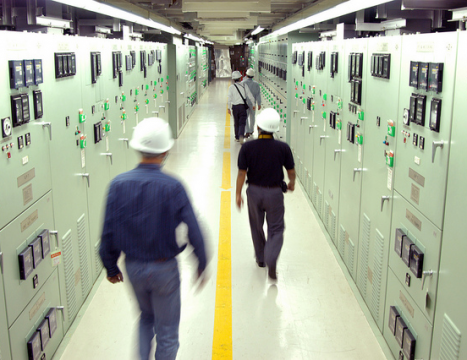
The European stress tests of nuclear power plants are well on track and will further enhance nuclear safety and security in the EU, the Commission says in its very first Communication on the stress tests. Following the nuclear accident in Fukushima, the EU reacted swiftly and agreed on voluntary tests for all of its 143 nuclear power plants based on a set of common criteria. In its Communication published today, the Commission looks at first findings of these stress tests and points to some policy areas where new the EU nuclear safety framework can be strenghened with common standards. Results of the stress tests will be known next year once the tests are finalised.
European Commissioner for energy Günther Oettinger said: “The stress tests are an essential step in our effort to enhance the safety and security of nuclear power plants in Europe. We cannot accept anything less than the highest possible technical standards. While each individual Member State has the right to decide whether to produce nuclear power or not, it must be made sure that citizens are not put at risk and that the highest safety standards are not only prescribed but also respected everywhere in the EU, and beyond."
All 14 EU Member States which operate nuclear power plants (Belgium, Bulgaria, Czech Republic, Finland, France, Germany, Hungary, the Netherlands, Romania, Slovak Republic, Slovenia, Spain, Sweden and United Kingdom) and Lithuania, which is currently decommissioning its last nuclear power producing unit, are taking part in the stress tests. EU neighbours such as Switzerland and Ukraine also participate actively in the exercise, whereas other neighbouring countries confirmed their commitment to participate.
Tests are on track according to the agreed schedule and deadlines have been kept. Nuclear operators had to send a first report to the national regulators by 15 August, and the national regulators sent their interim national reports to the EU Commission by 15 September.
The stress tests are carried out on a voluntary basis and conducted for the very first time in the EU. The comprehensive and transparent assessments currently underway will further enhance nuclear safety and security in the EU. Nuclear safety is indivisible. This is why, with the protection of EU citizens in mind, it is paramount to establish a process aiming for the highest possible common safety and security standards.
Security threats, namely the prevention of and response to intentional acts, are assessed in a parallel process run under the auspices of the Council of the EU. The progress report of the newly created Council Ad-hoc Group on Nuclear Security, annexed to the Commission interim report, highlights that Member States in their commitment to nuclear security are ready to go further, making full use of, and strengthening, relevant international regimes.
The European Commission is already now drawing the first lessons from the tests, although the final results of the stress tests will only be known next year, when the tests are completed. The Communication identifies a number of policy areas where further action is deemed necessary, either through better coordination among Member States or by proposing new EU legislation on nuclear safety:
New EU legislation could define common criteria for the siting, the design, the construction and the operation of nuclear power plants. Legal provisions should also enhance the independence of national regulators which grant the licence and make controls on the spot.
Member States could put cross-border nuclear risk management plans to prepare better for a nuclear emergency and to coordinate their response actions.
A European approach to liability should be achieved. Victims should become the same compensation irrespective of their country of residence.
EU Research Programmes should focus on nuclear safety.
The aim of the stress tests is to reassess whether the nuclear power plants can withstand the effects of natural disasters, human failures or malevolent acts.
Operators have to submit the final report by 31 October 2011 and national authorities by 31 December 2011. The final national reports will be subject to the peer review process conducted by experts from other Member States and a representative by the EU Commission. The European Commission will present the final results to the European Council for the meeting scheduled for June 2012.
The national reports and peer review results will be public. National progress reports are available at the ENSREG website.
 All world news
No published comments
Login to comment
 Interview
 Full text
 Events


