News

World news Bookmark and Share

17.03.2010 10:25
The afterlife of Olympic villages
Among the lasting legacies for Olympic host cities are the villages constructed to house athletes and officials. After the final medals are awarded, how do cities capitalize on these massive remnants of their games
AUTHOR: publics.bg


  • © © Millennium Creek/Rennie Marketing Systems
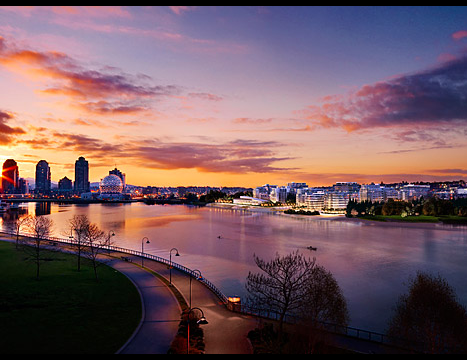

For the 2010 Winter Olympics, about 3,000 of the world’s best athletes (and officials) took over a corner of downtown Vancouver, British Columbia — not to mention the little city that skiers and bobsledders created 70 miles north, in Whistler. Such Olympic villages can be billion-dollar creations that are in the world’s spotlight for just a few weeks.

So what happens to these glamorous villages when the athletes pack up their medals, memories and dirty laundry to fly home?

If the planners have done their homework and everybody keeps their promises, the villages are in for a long and productive post-games life. But that’s not always how it works out. Here’s our look at the afterlife of several villages from the past few decades.

Vancouver: The best (and costliest) village ever?
With its Olympic Village, Vancouver is certainly gunning for one of the most dramatic transformations of a site — and it looks like it may succeed.

What the athletes may not know, as they enjoy the spectacular views across False Creek toward the Vancouver skyline and the North Shore Mountains beyond, is that city planners have hoped to transform this land since the 1970s. The Southeast False Creek area was the last remaining piece of undeveloped waterfront in downtown Vancouver. Most recently, its big tenant was the city’s public works yard.
That all changed with the Olympic Village — 18 midrise buildings with enough apartments to accommodate 2,730 athletes and officials during the Olympics, and an additional 350 during the Paralympics in March.

After the games, the ultragreen village (rechristened Millennium Water) will become the centerpiece of the larger Southeast False Creek neighborhood. The village’s 1,100 units will include 730 market-rate condos, 120 market rental apartments and 250 affordable rental apartments. (Many of the condos already have sold, for about $950 per square foot.)

Homeowners won’t be able to move in as soon as the games end, however. Once the village is handed back to the developer this spring, the buildings need to be touched up and retooled: Kitchens that were boarded up for the games so athletes couldn’t use them must be completed. Nice wood flooring must be installed (often right atop the carpeting in place for the athletes, which will be used as padding).

The apartments aren’t the only thing that will need to be altered: A 45,000-square-foot community center on the waterfront, which is now serving as the village mayor’s office during the games, among other uses, will be refitted with a day-care center, a restaurant, a nonmotorized boating center and a gym.

The goal is to create a complete community with all the things it needs, where none existed before. By 2020, city planners expect the Southeast False Creek neighborhood to be home to 16,000 people living in more than 5,000 apartments and condos. They’ll be able to enjoy 26 acres of parkland, including a new waterfront promenade, a public plaza and a community garden.

Sound good? It should. The Vancouver press has reported that the $1 billion project is $130 million over budget to date.

For faith of the other Olympic villages - click here

video here: http://www.youtube.com/watch?v=KX6aGfaj_mg


TAGS: Olympic | villages | Vancouver | sustainable development 


All world news

No published comments
Login to comment


Interview

20.03.2022  Teodor Bobochikov, Managing Partner, V-Ridium
Energy Transformation – Trends and drivers
Full text

Events

No records in this category!

Poll

What kind of transport do you use to get to work?


We use cookies to ensure we give you the best browsing experience on our website. Find out more on how we use cookies and how you can change your settings.

Cookies

What are cookies ?

A cookie is a small text file that a website saves on your computer or mobile device when you visit the site. Cookies are widely used in order to make websites work, or work more efficiently, as well as to provide information to the owners of the site.

How do we use cookies?

Website use Google Analytics, a web analytics service provided by Google, Inc. ("Google") to help analyse the use of this website. For this purpose, Google Analytics uses"cookies", which are text files placed on your computer.

The information generated by the cookies about your use of this website - standard internet log information (including your IP address) and visitor behaviour information in an anonymous form - will be transmitted to and stored by Google including on servers in the United States. Google will anonymize the information sent by removing the last octet of your IP address prior to its storage.

According to Google Analytics terms of service, Google will use this information for the purpose of evaluating your use of the website and compiling reports on website activity.

We not use, and not allow any third party to use the statistical analytics tool to track or to collect any personally identifiable information of visitors to this site. Google may transfer the information collected by Google Analytics to third parties where required to do so by law, or where such third parties process the information on Google`s behalf.

According to Google Analytics terms of service, Google will not associate your IP address with any other data held by Google.

You may refuse the use of Google Analytics cookies by downloading and installing Google Analytics Opt-out Browser Add-on. The add-on communicates with the Google Analytics JavaScript (ga.js) to indicate that information about the website visit should not be sent to Google Analytics.

Cookies are also used to record if you have agreed (or not) to our use of cookies on this site, so that you are not asked the question every time you visit the site.

Google Analytics Opt-out Browser Add-on

How to control cookies?

You can control and/or delete cookies as you wish. You can delete all cookies that are already on your computer and you can set most browsers to prevent them from being placed.

All about cookies

Managing cookies in your browser

Most browsers allow you to:
  • see what cookies you have got and delete them on an individual basis
  • block third party cookies
  • block cookies from particular sites
  • block all cookies from being set
  • delete all cookies when you close your browser

If you chose to delete cookies, you should be aware that any preferences will be lost. Also, if you block cookies completely many websites (including ours) will not work properly and webcasts will not work at all. For these reasons, we do not recommend turning cookies off when using our webcasting services.
X
} catch(err) {}