News

World news Bookmark and Share

15.09.2011 17:30
Trans-Adriatic Pipeline Submits Independent Application to Greek Regulator
TAP will be ready to commence pipeline operations in time for first export gas west of Turkey (expected in 2017/18) from Shah Deniz
AUTHOR: publics.bg


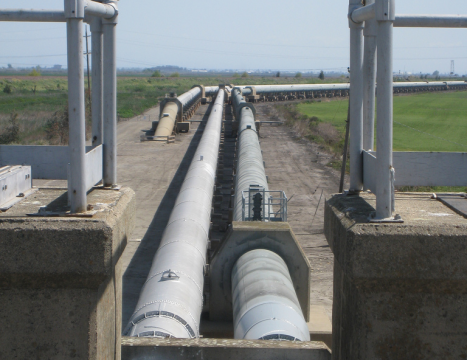
  • © Aquafornia@flickr.com

Baar, Switzerland. The Trans Adriatic Pipeline (TAP) has submitted its application for the construction of an Independent Natural Gas System (INGS) to RAE, the Greek Regulatory Authority for energy. TAP’s Greek section of the pipeline will be approximately 465 km long and will commence at Komotini, where it ties into the national grid system. The pipeline will then cross Greece, Albania and the Adriatic Sea, coming ashore in southern Italy.
 
Rikard Scoufias, TAP’s Country Manager in Greece, commented: “TAP’s INGS submission follows shortly after on our TPA (Third Party Access) exemption application last month and constitutes a key element of the final steps towards concluding the permitting process for construction of the TAP pipeline. The construction itself, which is backed by some of the largest European energy companies (Statoil, EGL and E.ON), is expected to bring in excess of EUR 1.5bn investment into Greece and to generate approximately 2,000 jobs. I am very pleased to see how well we are progressing with the Greek authorities regarding our various permits. Our commitment to Greece stands as firm as ever, and we are looking forward to a long and fruitful partnership.”
 
TAP will be ready to commence pipeline operations in time for first export gas west of Turkey (expected in 2017/18) from Shah Deniz.
 
The Trans Adriatic Pipeline (TAP) is a natural gas pipeline project that will transport gas from the Caspian region via Greece and Albania and across the Adriatic Sea to southern Italy and further into western Europe. The project is aimed at enhancing security of supply as well as diversification of gas supplies for the European markets. TAP will open a new so-called Southern Gas Corridor to Europe and establish a new market outlet for natural gas from the Caspian Sea and beyond.
 
The project is designed to expand transportation capacity from 10 to 20 bcm per year. TAP also envisages physical reverse flow of up to 80 per cent and the option to develop natural gas storage facilities in Albania to further ensure security of supply.
 
TAP’s shareholders are EGL of Switzerland (42.5%), Norway’s Statoil (42.5%) and E.ON Ruhrgas of Germany (15%).
 
TAP’s transportation solution will be approximately 800 kilometres in length (Approx.: Greece 466 km; Albania 204 km; offshore Adriatic Sea 110 km; Italy 4 km). Transport will begin near the Greek-Turkish border (Komotini), cross Albania and the Adriatic Sea, and connect with the Italian natural gas distribution system near San Foca in Italy.

TAGS: TAP | Trans-Adriatic Pipeline | EGL | Statoil | E.ON Ruhrgas | nantural gas | Shah Deniz 


All world news

No published comments
Login to comment


Interview

20.03.2022  Teodor Bobochikov, Managing Partner, V-Ridium
Energy Transformation – Trends and drivers
Full text

Events

No records in this category!

Poll

What kind of transport do you use to get to work?


We use cookies to ensure we give you the best browsing experience on our website. Find out more on how we use cookies and how you can change your settings.

Cookies

What are cookies ?

A cookie is a small text file that a website saves on your computer or mobile device when you visit the site. Cookies are widely used in order to make websites work, or work more efficiently, as well as to provide information to the owners of the site.

How do we use cookies?

Website use Google Analytics, a web analytics service provided by Google, Inc. ("Google") to help analyse the use of this website. For this purpose, Google Analytics uses"cookies", which are text files placed on your computer.

The information generated by the cookies about your use of this website - standard internet log information (including your IP address) and visitor behaviour information in an anonymous form - will be transmitted to and stored by Google including on servers in the United States. Google will anonymize the information sent by removing the last octet of your IP address prior to its storage.

According to Google Analytics terms of service, Google will use this information for the purpose of evaluating your use of the website and compiling reports on website activity.

We not use, and not allow any third party to use the statistical analytics tool to track or to collect any personally identifiable information of visitors to this site. Google may transfer the information collected by Google Analytics to third parties where required to do so by law, or where such third parties process the information on Google`s behalf.

According to Google Analytics terms of service, Google will not associate your IP address with any other data held by Google.

You may refuse the use of Google Analytics cookies by downloading and installing Google Analytics Opt-out Browser Add-on. The add-on communicates with the Google Analytics JavaScript (ga.js) to indicate that information about the website visit should not be sent to Google Analytics.

Cookies are also used to record if you have agreed (or not) to our use of cookies on this site, so that you are not asked the question every time you visit the site.

Google Analytics Opt-out Browser Add-on

How to control cookies?

You can control and/or delete cookies as you wish. You can delete all cookies that are already on your computer and you can set most browsers to prevent them from being placed.

All about cookies

Managing cookies in your browser

Most browsers allow you to:
  • see what cookies you have got and delete them on an individual basis
  • block third party cookies
  • block cookies from particular sites
  • block all cookies from being set
  • delete all cookies when you close your browser

If you chose to delete cookies, you should be aware that any preferences will be lost. Also, if you block cookies completely many websites (including ours) will not work properly and webcasts will not work at all. For these reasons, we do not recommend turning cookies off when using our webcasting services.
X
} catch(err) {}