News

World news Bookmark and Share

15.08.2011 15:05
New Energy Act Unbundles Serbian Electricity Market in 2012
In early 2015 small consumers and households would have the possibility to choose their supplier, while the industry should have access to the liberalized market as of next year.
AUTHOR: publics.bg


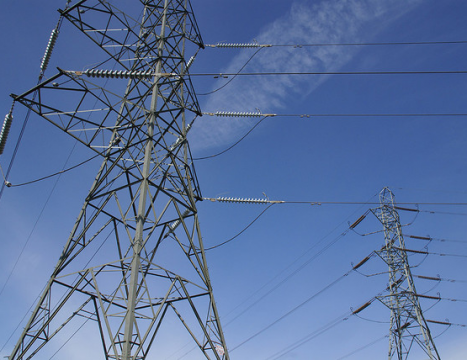
  • © freefotouk@flickr.com

National Assembly of Serbia adopted the new Energy Act, which should liberalize all parts of the country’s energy market. The new energy act is seen as another harmonization step in Serbia’s path to EU membership, serbia-energy.com reported.
 
The new energy law increases the role of the Serbian Energy Agency and aims at securing the supplies. Furthermore, investment procedures see a significant simplification. Renewable energy and energy efficiency matters would have more investments incentives.
 
According to the new law as of October 1, 2012, the Energy Agency will be determining the prices of electricity and gas, currently controlled by the government.
 
The new energy act pins the liberalization of electricity market as of January, 2013. In early 2015 small consumers and households would have the possibility to choose their supplier, while the industry should have access to the liberalized market as of next year.
 
The much expected balancing market and energy exchange should also become reality in 2012.
 
Feed-in tariffs are planned for electricity from biomass, wind, water, solar and geothermal energy. Wind and solar higher feed-in tariff period is 3 years which could be further extended with one year.
 
As of next year consumers would be able to see the green energy tariff separately in their electricity bills.
 
Certificates for green energy would allow producers to export electricity. The certificates would be issued for quantities starting at 1MWh.
 
In accordance with harmonization process with European regulations, the new right for access to gas pipelines and grid network are allowed, with certain exceptions.
 
It is planed that the energy permits are issued for period of three years, instead of 2 years as it was the case so far. Energy licenses will be valid for 10 years, except for producers of electricity and heat energy whose license will be valid for 30 years.
 
The energy law introduces also energy inspectors and inspectors for pressure parts and equipment for supervision of facilities for electricity production, production, transport and storage of oil and gas. The inspection will be carried out by the Ministry of Energy.

TAGS: Serbia | energy market | liberalization | unbundling | EU membership | consumer protection | gas | security of supplies | green energy | wind | solar | biomass 


All world news

No published comments
Login to comment


Interview

20.03.2022  Teodor Bobochikov, Managing Partner, V-Ridium
Energy Transformation – Trends and drivers
Full text

Events

No records in this category!

Poll

What kind of transport do you use to get to work?


We use cookies to ensure we give you the best browsing experience on our website. Find out more on how we use cookies and how you can change your settings.

Cookies

What are cookies ?

A cookie is a small text file that a website saves on your computer or mobile device when you visit the site. Cookies are widely used in order to make websites work, or work more efficiently, as well as to provide information to the owners of the site.

How do we use cookies?

Website use Google Analytics, a web analytics service provided by Google, Inc. ("Google") to help analyse the use of this website. For this purpose, Google Analytics uses"cookies", which are text files placed on your computer.

The information generated by the cookies about your use of this website - standard internet log information (including your IP address) and visitor behaviour information in an anonymous form - will be transmitted to and stored by Google including on servers in the United States. Google will anonymize the information sent by removing the last octet of your IP address prior to its storage.

According to Google Analytics terms of service, Google will use this information for the purpose of evaluating your use of the website and compiling reports on website activity.

We not use, and not allow any third party to use the statistical analytics tool to track or to collect any personally identifiable information of visitors to this site. Google may transfer the information collected by Google Analytics to third parties where required to do so by law, or where such third parties process the information on Google`s behalf.

According to Google Analytics terms of service, Google will not associate your IP address with any other data held by Google.

You may refuse the use of Google Analytics cookies by downloading and installing Google Analytics Opt-out Browser Add-on. The add-on communicates with the Google Analytics JavaScript (ga.js) to indicate that information about the website visit should not be sent to Google Analytics.

Cookies are also used to record if you have agreed (or not) to our use of cookies on this site, so that you are not asked the question every time you visit the site.

Google Analytics Opt-out Browser Add-on

How to control cookies?

You can control and/or delete cookies as you wish. You can delete all cookies that are already on your computer and you can set most browsers to prevent them from being placed.

All about cookies

Managing cookies in your browser

Most browsers allow you to:
  • see what cookies you have got and delete them on an individual basis
  • block third party cookies
  • block cookies from particular sites
  • block all cookies from being set
  • delete all cookies when you close your browser

If you chose to delete cookies, you should be aware that any preferences will be lost. Also, if you block cookies completely many websites (including ours) will not work properly and webcasts will not work at all. For these reasons, we do not recommend turning cookies off when using our webcasting services.
X
} catch(err) {}