News

World news Bookmark and Share

11.08.2011 11:21
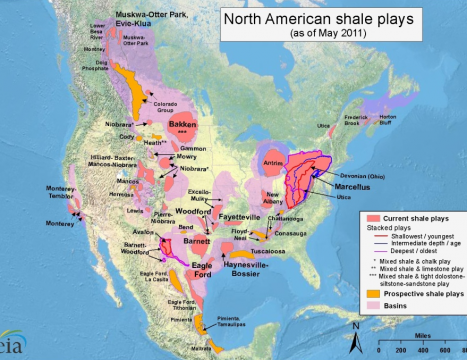
US Energy Department Will Endorse Shale Gas Exploration
The group’s recommendations will go to Energy Secretary Steven Chu, whose department does not regulate natural gas production
AUTHOR: publics.bg


A key Energy Department advisory panel will issue a qualified endorsement of shale gas exploration today, according to a publication in Washington Post. The report says that hydraulic fracturing, or “fracking,” can continue safely as long as companies disclose more about their practices and monitor their environmental impact. The committee’s report could ease the way for greater domestic gas exploration, even as it calls for new standards to limit harmful air emissions that bring to the surface gas buried deep in shale formations, the article says. However, Washington Post notes that the report is largely silent on the most contentious issue surrounding shale gas exploration: who should regulate it, and whether regulators should apply to it laws such as the Safe Drinking Water Act.

Shale gas accounted for less than 2 percent of total U.S. natural gas production in 2001; it is now close to 30 percent, and the Energy Information Administration projects that it will amount to 45 percent of domestic production by 2035, the article says. As drilling activity has moved closer to residential areas - and as some researchers have found unusually high methane concentrations in nearby drinking water - local activists have called for a stop to further drilling. But industry officials, many politicians and some environmentalists have argued that the country must exploit a domestic energy source that does not release as much carbon dioxide as other fossil fuels when burned.

The group’s recommendations will go to Energy Secretary Steven Chu, whose department does not regulate natural gas production. But its advice, which covers potential actions by regulators and industry, could carry political weight because President Obama asked Chu to establish the advisory group. On Wednesday, the Environmental Working Group released a letter signed by 28 scientists objecting to the panel, noting that six of its members had connections to industry. The panel’s report calls for full disclosure of the chemicals used in fracturing liquids, along with “adoption of rigorous emission standards for both new and existing sources for methane, air toxics, ozone-forming pollutants and other major airborne contaminants,” although it does not specify whether state or federal regulators should impose those rules.

The Environmental Protection Agency, which regulates air and water quality, is conducting its own study of fracking’s effect on the environment and public health. EPA spokeswoman Betsaida Alcantara said that the agency is reviewing the panel’s recommendations and that it will issue an initial report of its findings in 2012. The Independent Petroleum Association of America said that “the report stands in stark contrast to the strident, hysterical demands for moratoria on hydraulic fracturing.”

The shale gas exploration report is available from the Washington Post website.


TAGS: shale gas | natural gas | DOE | energy department | Steven Chu | Barrack Obama | exploration | extraction | drilling 


All world news

No published comments
Login to comment


Interview

20.03.2022  Teodor Bobochikov, Managing Partner, V-Ridium
Energy Transformation – Trends and drivers
Full text

Events

No records in this category!

Poll

What kind of transport do you use to get to work?


We use cookies to ensure we give you the best browsing experience on our website. Find out more on how we use cookies and how you can change your settings.

Cookies

What are cookies ?

A cookie is a small text file that a website saves on your computer or mobile device when you visit the site. Cookies are widely used in order to make websites work, or work more efficiently, as well as to provide information to the owners of the site.

How do we use cookies?

Website use Google Analytics, a web analytics service provided by Google, Inc. ("Google") to help analyse the use of this website. For this purpose, Google Analytics uses"cookies", which are text files placed on your computer.

The information generated by the cookies about your use of this website - standard internet log information (including your IP address) and visitor behaviour information in an anonymous form - will be transmitted to and stored by Google including on servers in the United States. Google will anonymize the information sent by removing the last octet of your IP address prior to its storage.

According to Google Analytics terms of service, Google will use this information for the purpose of evaluating your use of the website and compiling reports on website activity.

We not use, and not allow any third party to use the statistical analytics tool to track or to collect any personally identifiable information of visitors to this site. Google may transfer the information collected by Google Analytics to third parties where required to do so by law, or where such third parties process the information on Google`s behalf.

According to Google Analytics terms of service, Google will not associate your IP address with any other data held by Google.

You may refuse the use of Google Analytics cookies by downloading and installing Google Analytics Opt-out Browser Add-on. The add-on communicates with the Google Analytics JavaScript (ga.js) to indicate that information about the website visit should not be sent to Google Analytics.

Cookies are also used to record if you have agreed (or not) to our use of cookies on this site, so that you are not asked the question every time you visit the site.

Google Analytics Opt-out Browser Add-on

How to control cookies?

You can control and/or delete cookies as you wish. You can delete all cookies that are already on your computer and you can set most browsers to prevent them from being placed.

All about cookies

Managing cookies in your browser

Most browsers allow you to:
  • see what cookies you have got and delete them on an individual basis
  • block third party cookies
  • block cookies from particular sites
  • block all cookies from being set
  • delete all cookies when you close your browser

If you chose to delete cookies, you should be aware that any preferences will be lost. Also, if you block cookies completely many websites (including ours) will not work properly and webcasts will not work at all. For these reasons, we do not recommend turning cookies off when using our webcasting services.
X
} catch(err) {}