

|

|

Online Newsletter
Sign up for our newsletter to receive the latest news and information from publics.bg
Sign up for our newsletter to receive the latest news and information from publics.bg


News
From Bulgaria


 07.07.2011 16:55
The State Railways: Reforms, Loans and Bold Construction Plans
Vows for better financial condition through reforms and railway and service modernization marked the last couple of months, culminating in the appointment of a new executive director of BDZ this week
© fips_schneider@flickr.com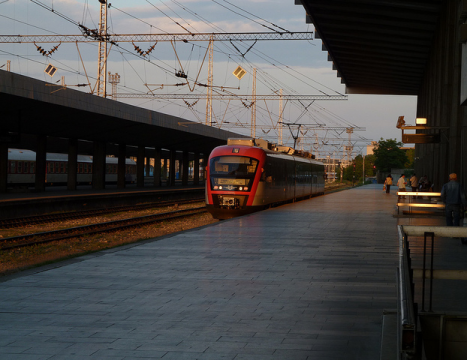
On Monday Bulgaria’s transport minister Ivailo Moskovski appointed Yordan Nedev as the new Executive Director of the state-owned railway operator BDZ. The decision comes after new financial issues and delayed debts surged faster reforms of the company’s structure and functioning.
Nedev was previously a consultant for MMD Partners and has worked on two projects with BDZ.
Loans expected to partly make up for bad results
Nedev stated his intents to manage the holding the best way possible and “without sentiment” in order to improve its financial results. In his words all major railway lines - Sofia-Varna, Sofia-Plovdiv, and Sofia-Burgas, were rather contributing to the worsening results than adding income.
Yesterday it became clear that BDZ will be granted a loan from the Bulgarian Investment Bank amounting to BGN 140 m (about EUR 70 m) which will add up to the loan from the European Investment Bank and the much needed and yet to be seen funding within the framework of Operational Program Transport 2007 – 2013.
It is yet unclear how the state railways would cope with their growing fuel debt to Lukoil, currently pinned at BGN 4.5 m, while putting aside millions for new trains.
Reforms needed in BDZ to face the future
After protests of workers in March forced transport minister at the time Alexander Tsvetkov to put on hold planned staff redundancies, BDZ took a turn to financial tools in order to improve its financial condition.
Today BDZ board director Vladimir Vladimirov said that the prices of tickets would go up with as much as 5% as of next month. Minister Moskovski is expected to give his approval to the suggested increase.
Green light given to some technological innovations
Despite its aging train park, BDZ decided to go for some technology to its services. On June 29 the company launched a test project for free wi-fi internet access, provided by Nokia Siemens Networks, on the Sofia-Burgas route, which should make the trains more popular among tourists.
Following the changes in its management, BDZ came up with an even more ambitious idea concerning the reconstruction and turning into a modern railway terminal of Vratsa train station. The project includes taking underground the current 7.5 km railway across the town and adding at leat 3 more tracks and a new train station. The megaproject is yet to undergo an environmental assessment. According to BDZ the Ministry of Transport and the European Bank for reconstruction and Development have been informed about the EUR 75 m.
Despite the inherited bad condition of the railroads, this might end up as a rather viable investment, given that Vratsa is part of the Sofia-Vidin railway which falls within EU transport Corridor 4, linking Central Europe with Greece and Turkey.
Furthermore this route was pronounced part of Bulgaria’s critical infrastructure along with five other major railways and an intermodal terminal to be built in Plovdiv.
The Plovdiv terminal might be considered in parallel with the idea of the Bulgarian Industrial Association (BIA) for the creation of a national intermodal cluster. In January 2011 BIA discussed the construction of a similar intermodal center near the Black Sea port Burgas.
This might be a delayed but rather clear sign for Bulgaria’s intent to make further steps towards the development of integrated transport solutions.
 All news from Bulgaria
No published comments
Login to comment
 Interview
 Full text
 Events


