News

World news Bookmark and Share

25.05.2011 15:24
EU Nuclear Stress Tests Start on 1 June
The Commission is also in close contact with countries outside the EU and is working with them on re-assessing their nuclear power plants
AUTHOR: publics.bg

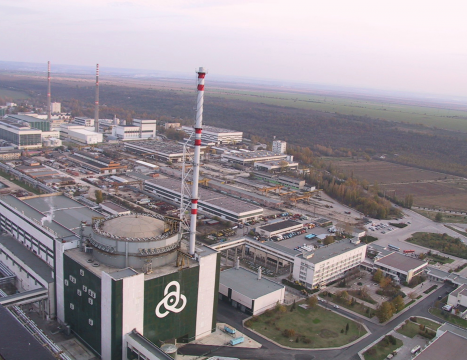
  • The Bulgarian Kozloduy NPP joined the stress tests earlier in March in order to determine their exact criteria
    © Kozloduy NPP
From 1 June 2011 onwards, all 143 nuclear power plants in the EU will be re-assessed using EU wide criteria, from the EC announced today. These are comprehensive tests as the Commission has called for which embrace both natural and man made hazards (i.e. effects of airplane crashes and terrorist attacks). The European Commission and the European Nuclear Safety Regulators' Group (ENSREG) agreed today on the criteria covered and the way controls will be done. 
 
The European Commission and the European Nuclear Safety Regulators' Group (ENSREG), which represents the 27 independent national authorities responsible for nuclear safety, have today agreed on the scope and the modalities for a comprehensive risk and safety assessment of EU nuclear power plants. The stress tests are re-assessments of the safety margins of the EU nuclear power plants. To guarantee the highest safety standards in the world, the EU draws the lessons from Fukushima and focuses in the tests on all sorts of natural disasters and includes also the effects of man-made accidents such as airplane crashes as well as terrorist or other malevolent attacks. 
 
All security-related aspects such as measures preventing terroristic attacks will be dealt separately, following discussions with Member States recognising among others the need for confidentiality.
 
From the 1 June onwards, nuclear power plants will be re-assessed in a three-step-process:
 
- Pre-assessment by the nuclear power plant operators which answer the stress tests questionnaire, submitting supporting documents, studies and plans.
- National Report drawn up by the national regulator checking whether answers of nuclear power plant operators are credible. 
- Peer reviews. Multinational teams will review the national reports. These teams will consist of seven people – one European Commission representative and six Members of the 27 national regulators. The exact composition of each team will be decided later. Teams can decide to inspect nuclear plants on the spot. 
 
The Commission is also in close contact with countries outside the EU and is working with them on re-assessing their nuclear power plants. These are in particular Switzerland, the Russian Federation, Ukraine and Armenia.

TAGS: nuclear | power plants | stress tests | security | energy | EU | Fukushima 


All world news

No published comments
Login to comment


Interview

20.03.2022  Teodor Bobochikov, Managing Partner, V-Ridium
Energy Transformation – Trends and drivers
Full text

Events

No records in this category!

Poll

What kind of transport do you use to get to work?


We use cookies to ensure we give you the best browsing experience on our website. Find out more on how we use cookies and how you can change your settings.

Cookies

What are cookies ?

A cookie is a small text file that a website saves on your computer or mobile device when you visit the site. Cookies are widely used in order to make websites work, or work more efficiently, as well as to provide information to the owners of the site.

How do we use cookies?

Website use Google Analytics, a web analytics service provided by Google, Inc. ("Google") to help analyse the use of this website. For this purpose, Google Analytics uses"cookies", which are text files placed on your computer.

The information generated by the cookies about your use of this website - standard internet log information (including your IP address) and visitor behaviour information in an anonymous form - will be transmitted to and stored by Google including on servers in the United States. Google will anonymize the information sent by removing the last octet of your IP address prior to its storage.

According to Google Analytics terms of service, Google will use this information for the purpose of evaluating your use of the website and compiling reports on website activity.

We not use, and not allow any third party to use the statistical analytics tool to track or to collect any personally identifiable information of visitors to this site. Google may transfer the information collected by Google Analytics to third parties where required to do so by law, or where such third parties process the information on Google`s behalf.

According to Google Analytics terms of service, Google will not associate your IP address with any other data held by Google.

You may refuse the use of Google Analytics cookies by downloading and installing Google Analytics Opt-out Browser Add-on. The add-on communicates with the Google Analytics JavaScript (ga.js) to indicate that information about the website visit should not be sent to Google Analytics.

Cookies are also used to record if you have agreed (or not) to our use of cookies on this site, so that you are not asked the question every time you visit the site.

Google Analytics Opt-out Browser Add-on

How to control cookies?

You can control and/or delete cookies as you wish. You can delete all cookies that are already on your computer and you can set most browsers to prevent them from being placed.

All about cookies

Managing cookies in your browser

Most browsers allow you to:
  • see what cookies you have got and delete them on an individual basis
  • block third party cookies
  • block cookies from particular sites
  • block all cookies from being set
  • delete all cookies when you close your browser

If you chose to delete cookies, you should be aware that any preferences will be lost. Also, if you block cookies completely many websites (including ours) will not work properly and webcasts will not work at all. For these reasons, we do not recommend turning cookies off when using our webcasting services.
X
} catch(err) {}