

|

|

Sign up for our newsletter to receive the latest news and information from publics.bg


News
World news


 22.03.2011 19:20
- Acquired by Boeing in 1996, Santa Susana is a former field laboratory used for rocket engine testing and energy research that is undergoing a cleanup for soil, storm water and ground water contamination.
© Boeing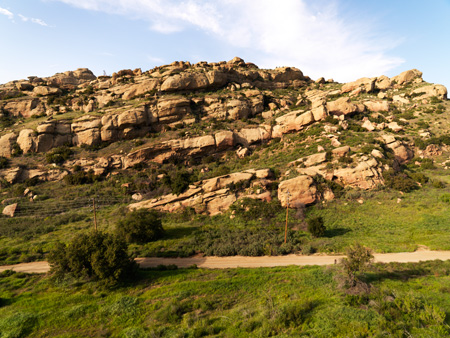
Boeing and the Ecole Polytechnique Federale de Lausanne (EPFL) today announced the creation of the Sustainable Biomass Consortium, a research initiative focused on increasing collaboration between voluntary standards and regulatory requirements for biomass used to create jet fuel and bioenergy for other sectors. The consortium also will seek to lower overall sustainability certification costs. Biomass is a renewable energy source, often plant matter.
The Sustainable Biomass Consortium will conduct collaborative research with environmental organizations, governments and civil society groups to help align regional and regulatory requirements, while bolstering the ability to provide independent verification of the sustainability and traceability of biomass sources. Working closely with the Roundtable on Sustainable Biofuels (RSB), this effort will put aviation on a path to compliance and accreditation, while providing guidance for developing local economies and access to other markets.
Research projects will commence in April 2011 and the scope of work over the next two years will include projects in China, Africa, the EU, Latin America, North America and Australasia. Specifics will be announced as projects are launched, and more than 10 are currently in development.
"With increasing environmental, regulatory and social pressures on aviation, having harmonized standards for sustainable biofuel development is crucial," said Boeing Commercial Airplanes Vice President of Environmental and Aviation Policy Billy Glover. "Our industry needs these fuel sources and this consortium will help ensure we have a transparent way to collaborate among certification processes that guide us toward a more sustainable future."
"In partnership with important international stakeholders, the EPFL Energy Center established the Roundtable on Sustainable Biofuels and initiated the development of a highly recognized standard for sustainable biofuels production," said Energy Center Director, Professor Hans Bjorn Puttgen. "Now that the certification using the RSB standard is being launched, the Sustainable Biomass consortium provides a unique opportunity to initiate a process to further make sustainability certification even more practical and needs-oriented. EPFL is very proud to collaborate with an industry leader such as Boeing in this emblematic venture."
"Working with leaders in sustainability and with governments around the world to ensure that strong and credible standards for sustainable energy are implemented in a way that benefits civil society and our planet is the proper and preferred approach," said National Wildlife Federation International Climate and Energy Program Senior Advisor, Barbara Bramble. "Improving the efficient administration and coherence of different sustainability certification standards for biomass development will help the whole industry to achieve certification. Wide adoption of robust standards will protect potentially vulnerable countries and ecosystems throughout the world."
The Sustainable Biomass Consortium will use current aviation biofuel initiatives to launch its regional benchmarking efforts, based on the global sustainability standard of the RSB, which this week announced its certification system. Boeing and EPFL are also funding the creation of a fact base for transparent analysis of existing sustainability standards and supporting aspects including the construction of verification and tracking systems. The effort is expected to take 3-5 years and is open to other third-party participation.
Sustainable biofuel development is a key element of aviation's strategy for lowering its carbon emissions. Only biomass sources that provide an overall lifecycle carbon reduction benefit, don't distort the global food-chain, compete with fresh water resources or lead to natural habitat loss or unintended land use change are being considered.
 All world news
 Interview
 Full text
 Events


