

|

|

Sign up for our newsletter to receive the latest news and information from publics.bg


News
World news


 01.03.2010 13:39
© tinken @flickr.com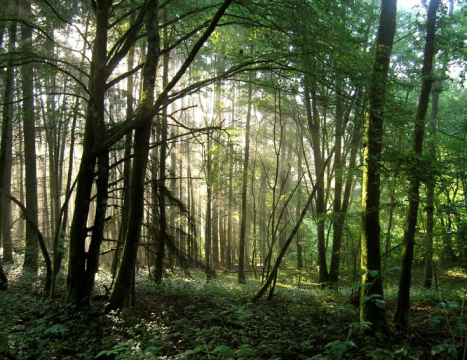
The European Commission today adopted a Green Paper which sets out options for a European Union approach to the protection of forests and to information about forest resources and their condition. Responses to the Green Paper from the public, Member States, EU institutions and other stakeholders will guide the Commission on whether additional action is needed at EU level.
European Environment Commissioner Janez Potočnik said: "Europe's forests are a precious resource that must be protected against the harmful impacts of climate change and biodiversity loss. Their wide range of social, economic and environmental functions means that the stakes are high. We need to explore what value European action can add to national efforts to safeguard forests and maintain reliable, coherent and up-to-date information about them."
Connie Hedegaard, European Commissioner for Climate Action said: "As huge stores of carbon, forests will play a critical role in efforts to keep global warming below 2°C. Ensuring that Europe's forests can continue to perform all their functions is essential to the EU's climate strategy. I very much welcome the timely launch of this debate.The inputs we receive will help us to design effective EU policies related to climate and forests."
Content and aims of the Green Paper
The Green Paper[1] sets out the main challenges facing Europe's forests. It presents existing forest information systems and the tools available to protect forests, and raises a series of questions relevant to the development of future policy options. The paper is part of the follow-up to the White Paper[2] on adapting to climate change adopted by the Commission in April 2009.
Since competence for forest policy lies primarily with the Member States, the debate should focus on how climate change is modifying forest management and protection in Europe and how EU policy should evolve to enhance its contribution to Member State initiatives.
Forests and climate change
Forests serve multiple and inter-related social, economic and environmental functions. They provide jobs, income and raw materials for industry and for renewable energy. They protect soil, human settlements and infrastructure, regulate freshwater supplies and conserve biodiversity. In climate terms, forests act as 'sinks' that absorb carbon dioxide (CO2), the main greenhouse gas, when they are growing but they are sources of CO2 when they are cut, burned or damaged by storms and pests. Forests also regulate local and regional weather.
Forests and other wooded areas cover some 176 million hectares of the EU or more than 42% of the EU's land area. EU forests have continuously expanded for over 60 years and today account for 5% of the world's forest area. Most EU forests have grown in terms of their wood volume and carbon stock, thus removing more CO2 from the atmosphere. Globally, however, the loss of forests - mostly in developing countries - and other land use changes are now responsible for about 12-15% of global CO2 emissions, recent information shows.
The average temperature in Europe has risen by almost 1°C during the past century and the most optimistic projection sees an increase of 2°C by 2100. This rapid rate of man-made climate change is overwhelming the natural ability of ecosystems to adapt. It will alter the suitability of whole regions for certain forest types, forcing a shift in the natural distribution of tree species and leading to changes in the growth of existing forest stands. Extreme events such as storms, forest fires, droughts and heat waves are expected to become much more common and/or severe, thus adding to pressure on forests.
Next steps
A public consultation on the Green Paper will run from 1 March to 31 July 2010 on the Your Voice in Europe website (http://ec.europa.eu/yourvoice). As part of the consultation the Commission will organise a workshop and stakeholder meeting in Brussels as part of Green Week on 3 June. The Green Paper will also be discussed at a forest protection conference being organised by the Spanish presidency in Valsain, Spain, on 6-7 April.
 All world news
 Interview
 Full text
 Events


