News

World news Bookmark and Share

01.12.2010 11:43
Last-minute agreement on bus passenger rights
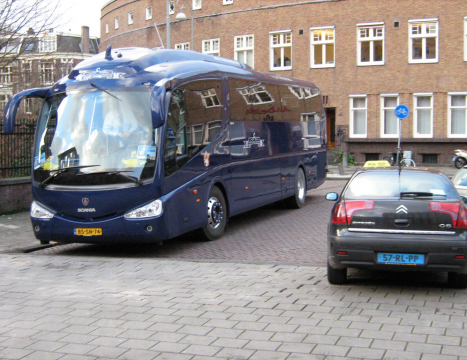
The rights of bus and coach passengers in Europe were boosted by an agreement on new EU legislation reached on Tuesday night between Parliament and Council representatives
AUTHOR: publics.bg


  • © Generaal Gibson @flickr.com


The regulation proposed by the Commission in December 2008 seeks to give bus and coach passengers rights comparable to those existing in other modes of transport, which are already covered by EU legislation on passenger rights.

In this latest legislation, MEPs took account of the economic realities facing road transport companies, many of which are small or medium-sized firms, but insisted they be obliged to provide assistance and information to passengers as well as compensation for death or physical injury. Compensation for lost or damaged luggage will be up to €1200.

Assistance in the event of delays

Bus service operators must inform their passengers of any timetable or route changes and provide meals and drinks if delays are long. If overnight accommodation is needed because a service has been suspended, the operator must pay for up to two nights (€80 maximum per night).

Refunds and compensation

If passengers are not allowed to board a bus or if departure is delayed by over 120 minutes, they can demand a full refund of their tickets or alternative transport to their destination. If the operator is unable to provide alternative transport, the traveller is entitled to additional compensation of 50% of the price of the ticket. Exemptions are allowed only in the event of natural disasters or extreme weather conditions.

Assistance for passengers with reduced mobility

MEPs defended the requirement for bus and coach companies to provide assistance to any person who is disabled or has reduced mobility, provided the passenger informs the company of his/her needs 36 hours before departure at the latest. If the operator is unable to provide suitable assistance, the passenger with reduced mobility may be accompanied at no extra cost by a companion of their choice.  Any loss of or damage to wheelchairs or other assistance equipment must be compensated by the company or the management body of the station responsible.

Compensation rules applicable only to services over 250 kilometres

To secure an agreement with negotiators of the Member States - a "balanced compromise rather than an ideal one" in the words of EP rapporteur Antonio Cancian (EPP, IT) - MEPs agreed that the rules on compensation should apply only to long-distance services over 250 kilometres (as opposed to the 500 kilometres initially demanded by the Council).

The EP delegation to the negotiations was led by Vice-President Rodi Kratsa-Tsagaropoulou (EPP, GR). Last night's compromise will now be put to a plenary vote in February.  The regulation will enter into force two years after publication in the EU Official Journal.


Source: European Parliament


TAGS: Passenger | rights | transport | bus | agreement 


All world news

No published comments
Login to comment


Interview

20.03.2022  Teodor Bobochikov, Managing Partner, V-Ridium
Energy Transformation – Trends and drivers
Full text

Events

No records in this category!

Poll

What kind of transport do you use to get to work?


We use cookies to ensure we give you the best browsing experience on our website. Find out more on how we use cookies and how you can change your settings.

Cookies

What are cookies ?

A cookie is a small text file that a website saves on your computer or mobile device when you visit the site. Cookies are widely used in order to make websites work, or work more efficiently, as well as to provide information to the owners of the site.

How do we use cookies?

Website use Google Analytics, a web analytics service provided by Google, Inc. ("Google") to help analyse the use of this website. For this purpose, Google Analytics uses"cookies", which are text files placed on your computer.

The information generated by the cookies about your use of this website - standard internet log information (including your IP address) and visitor behaviour information in an anonymous form - will be transmitted to and stored by Google including on servers in the United States. Google will anonymize the information sent by removing the last octet of your IP address prior to its storage.

According to Google Analytics terms of service, Google will use this information for the purpose of evaluating your use of the website and compiling reports on website activity.

We not use, and not allow any third party to use the statistical analytics tool to track or to collect any personally identifiable information of visitors to this site. Google may transfer the information collected by Google Analytics to third parties where required to do so by law, or where such third parties process the information on Google`s behalf.

According to Google Analytics terms of service, Google will not associate your IP address with any other data held by Google.

You may refuse the use of Google Analytics cookies by downloading and installing Google Analytics Opt-out Browser Add-on. The add-on communicates with the Google Analytics JavaScript (ga.js) to indicate that information about the website visit should not be sent to Google Analytics.

Cookies are also used to record if you have agreed (or not) to our use of cookies on this site, so that you are not asked the question every time you visit the site.

Google Analytics Opt-out Browser Add-on

How to control cookies?

You can control and/or delete cookies as you wish. You can delete all cookies that are already on your computer and you can set most browsers to prevent them from being placed.

All about cookies

Managing cookies in your browser

Most browsers allow you to:
  • see what cookies you have got and delete them on an individual basis
  • block third party cookies
  • block cookies from particular sites
  • block all cookies from being set
  • delete all cookies when you close your browser

If you chose to delete cookies, you should be aware that any preferences will be lost. Also, if you block cookies completely many websites (including ours) will not work properly and webcasts will not work at all. For these reasons, we do not recommend turning cookies off when using our webcasting services.
X
} catch(err) {}