News

World news Bookmark and Share

08.11.2017 17:47
France postpones cutting nuclear share of power production because of a risk to supply
AUTHOR: publics.bg

  • Environment Minister Nicolas Hulot said it was not realistic to cut nuclear energy’s share of electricity production to 50 percent by 2025 from 75 percent now.
    © IAEA Imagebank, flickr.com
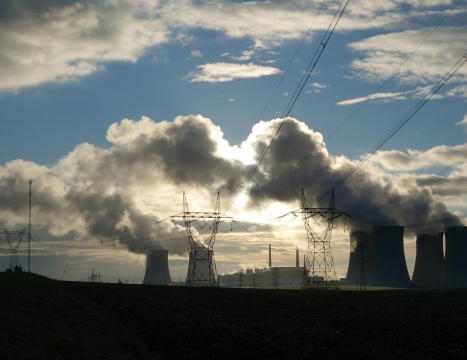
France risks power supply shortages after 2020 if it moves ahead with plans to simultaneously shut down four 40-year-old nuclear reactors and all its coal-fired plants, according to grid operator RTE, Reuters reported.

France aims to phase out coal and by 2025 to reduce nuclear power in its energy mix to 50 percent from 75 percent by shutting some reactors and increasing its use of renewable energy.

Beyond 2025, France will need to add about 11 GW in capacity using renewables and gas fired plants, RTE said in its 2017-2035 Electricity Outlook, citing French plans to shut down about 24 of the country’s 58 nuclear reactors. That could increase and even double France’s carbon dioxide (CO2) power generation emissions, RTE said.

After RTE warned of risk of supply shortages after 2020 and could miss a goal to curb carbon emissions, the French government has postponed a long-held target to reduce the share of nuclear energy in the country’s power production.

Environment Minister Nicolas Hulot said it was not realistic to cut nuclear energy’s share of electricity production to 50 percent by 2025 from 75 percent now and that doing so in a hurry would increase France’s CO2 emissions, endanger the security of power supply and put jobs at risk. He later said the government would be working towards a 2030 to 2035 timeframe. Hulot added that while there was a delay, the government would in a year’s time have a clear programme on which reactors to close and when.

In 2015, the previous government of Francois Hollande passed an energy transition law setting out the 50 percent target by 2025. But Hollande took no concrete steps towards closing any reactors.

President Emmanuel Macron had promised to keep the target. Hulot said in July it might have to close up to 17 of its 58 reactors by 2025 to achieve it.

State-owned EDF, the world’s biggest operator of nuclear plants, has long said it made no sense to shut down functioning reactors and instead wants to extend the lifespan of its nuclear fleet from 40 to at least 50 years.


TAGS: France | NPP | nuclear energy | reactor | energy mix | shutdown | closing | carbon emissions | RTE | EDF | Nicolas Hulot | Emmanuel Macron 


All world news

No published comments
Login to comment


Interview

20.03.2022  Teodor Bobochikov, Managing Partner, V-Ridium
Energy Transformation – Trends and drivers
Full text

Events

No records in this category!

Poll

What kind of transport do you use to get to work?


We use cookies to ensure we give you the best browsing experience on our website. Find out more on how we use cookies and how you can change your settings.

Cookies

What are cookies ?

A cookie is a small text file that a website saves on your computer or mobile device when you visit the site. Cookies are widely used in order to make websites work, or work more efficiently, as well as to provide information to the owners of the site.

How do we use cookies?

Website use Google Analytics, a web analytics service provided by Google, Inc. ("Google") to help analyse the use of this website. For this purpose, Google Analytics uses"cookies", which are text files placed on your computer.

The information generated by the cookies about your use of this website - standard internet log information (including your IP address) and visitor behaviour information in an anonymous form - will be transmitted to and stored by Google including on servers in the United States. Google will anonymize the information sent by removing the last octet of your IP address prior to its storage.

According to Google Analytics terms of service, Google will use this information for the purpose of evaluating your use of the website and compiling reports on website activity.

We not use, and not allow any third party to use the statistical analytics tool to track or to collect any personally identifiable information of visitors to this site. Google may transfer the information collected by Google Analytics to third parties where required to do so by law, or where such third parties process the information on Google`s behalf.

According to Google Analytics terms of service, Google will not associate your IP address with any other data held by Google.

You may refuse the use of Google Analytics cookies by downloading and installing Google Analytics Opt-out Browser Add-on. The add-on communicates with the Google Analytics JavaScript (ga.js) to indicate that information about the website visit should not be sent to Google Analytics.

Cookies are also used to record if you have agreed (or not) to our use of cookies on this site, so that you are not asked the question every time you visit the site.

Google Analytics Opt-out Browser Add-on

How to control cookies?

You can control and/or delete cookies as you wish. You can delete all cookies that are already on your computer and you can set most browsers to prevent them from being placed.

All about cookies

Managing cookies in your browser

Most browsers allow you to:
  • see what cookies you have got and delete them on an individual basis
  • block third party cookies
  • block cookies from particular sites
  • block all cookies from being set
  • delete all cookies when you close your browser

If you chose to delete cookies, you should be aware that any preferences will be lost. Also, if you block cookies completely many websites (including ours) will not work properly and webcasts will not work at all. For these reasons, we do not recommend turning cookies off when using our webcasting services.
X
} catch(err) {}