News

World news Bookmark and Share

21.03.2017 18:04
The EC to Examine Intergovernmental Gas Agreements with Non-EU Countries
The European Council approved today the communication mechanism
AUTHOR: publics.bg


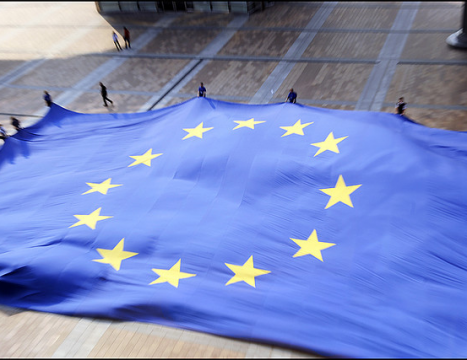
  • © European Parliament

The Council of the European Union said it adopted today without debate a decision on establishing an information exchange mechanism with regard to intergovernmental agreements and non-binding instruments between member states and third countries in the field of energy.

The aim of the decision is to correct shortcomings in the existing information exchange mechanism on energy contracts in order to enhance the transparency and consistency of the EU's external energy relations and to strengthen the EU's negotiation position vis-à-vis third countries.

Following three trilogues at the end of 2016, a compromise was found on the following key issues:

-    the definition of intergovernmental agreement: addition of "international organisations" and "transit"
-    the scope of the ex ante assessment of IGA's by the Commission: it will cover gas and oil with a standard review clause
-    when departing from the Commission's opinion in its ex ante assessment Member States should explain their reasons to the Commission in writing
-    non-binding instruments: subject to voluntary ex post notification

After being signed by the President of the European Parliament and the President of the Council, the legislative act will be published in the Official Journal of the European Union.

It will enter into force in the course of 2017 and, together with the regulation on the security of gas supply, it will play a major role in the implementation of the security dimension of the Energy Union Strategy.

As part of its "Winter Package" of February 2016, the Commission proposed that it examine international agreements in the field of energy before they are signed by member states. It argued that if certain provisions of an intergovernmental agreement ('IGA') are found to be incompatible with Union law (such as the Third Energy Package, competition law, public procurement rules), it is very difficult or even impossible for a member state to renegotiate the IGA with a third country.

The proposal also responded to the European Council's conclusions of March 2015 which called for full compliance with Union law of all agreements related to the purchase of gas from external suppliers.

The Council agreed on a general approach in June 2016  and reached an informal agreement with the European Parliament on 7 December 2016, which was confirmed by Coreper.


TAGS: EU | EC | gas contracts | intergovernmental agreements | third parties | non-EU countries | energy | Energy Union | energy security 


All world news

No published comments
Login to comment


Interview

20.03.2022  Teodor Bobochikov, Managing Partner, V-Ridium
Energy Transformation – Trends and drivers
Full text

Events

No records in this category!

Poll

What kind of transport do you use to get to work?


We use cookies to ensure we give you the best browsing experience on our website. Find out more on how we use cookies and how you can change your settings.

Cookies

What are cookies ?

A cookie is a small text file that a website saves on your computer or mobile device when you visit the site. Cookies are widely used in order to make websites work, or work more efficiently, as well as to provide information to the owners of the site.

How do we use cookies?

Website use Google Analytics, a web analytics service provided by Google, Inc. ("Google") to help analyse the use of this website. For this purpose, Google Analytics uses"cookies", which are text files placed on your computer.

The information generated by the cookies about your use of this website - standard internet log information (including your IP address) and visitor behaviour information in an anonymous form - will be transmitted to and stored by Google including on servers in the United States. Google will anonymize the information sent by removing the last octet of your IP address prior to its storage.

According to Google Analytics terms of service, Google will use this information for the purpose of evaluating your use of the website and compiling reports on website activity.

We not use, and not allow any third party to use the statistical analytics tool to track or to collect any personally identifiable information of visitors to this site. Google may transfer the information collected by Google Analytics to third parties where required to do so by law, or where such third parties process the information on Google`s behalf.

According to Google Analytics terms of service, Google will not associate your IP address with any other data held by Google.

You may refuse the use of Google Analytics cookies by downloading and installing Google Analytics Opt-out Browser Add-on. The add-on communicates with the Google Analytics JavaScript (ga.js) to indicate that information about the website visit should not be sent to Google Analytics.

Cookies are also used to record if you have agreed (or not) to our use of cookies on this site, so that you are not asked the question every time you visit the site.

Google Analytics Opt-out Browser Add-on

How to control cookies?

You can control and/or delete cookies as you wish. You can delete all cookies that are already on your computer and you can set most browsers to prevent them from being placed.

All about cookies

Managing cookies in your browser

Most browsers allow you to:
  • see what cookies you have got and delete them on an individual basis
  • block third party cookies
  • block cookies from particular sites
  • block all cookies from being set
  • delete all cookies when you close your browser

If you chose to delete cookies, you should be aware that any preferences will be lost. Also, if you block cookies completely many websites (including ours) will not work properly and webcasts will not work at all. For these reasons, we do not recommend turning cookies off when using our webcasting services.
X
} catch(err) {}