

|

|

Sign up for our newsletter to receive the latest news and information from publics.bg


News
World news


 13.03.2017 17:08
© Gazprom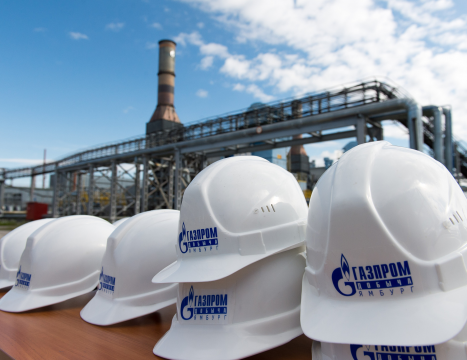
The European Commission (EC) invites comments from all interested parties on commitments submitted by Gazprom to address the Commission's competition concerns as regards gas markets in Central and Eastern Europe. The commitments will enable cross-border gas flows at competitive prices, the EC said in a press release.
One of the measures is for Gazprom to not seek compensation from Bulgaria for the cancellation of South Stream gas pipeline.
Commissioner in charge of competition policy, Margrethe Vestager, said: "We believe that Gazprom's commitments will enable the free flow of gas in Central and Eastern Europe at competitive prices. They address our competition concerns and provide a forward looking solution in line with EU rules. In fact, they help to better integrate gas markets in the region.
This matters to millions of Europeans that rely on gas to heat their homes and fuel their businesses.
We now want to hear the views of customers and other stakeholders and will carefully consider them before taking any decision."
Gazprom is the dominant gas supplier in a number of Central and Eastern European countries. In April 2015, the Commission sent a Statement of Objections expressing its preliminary view that Gazprom had been breaking EU antitrust rules by pursuing an overall strategy to partition Central and Eastern European gas markets.
In the Commission's view, the commitments offered by Gazprom cover its competition concerns. They help to better integrate Central and Eastern European gas markets, facilitating cross-border gas flows at competitive prices.
In particular, the Commission considers that Gazprom's commitments meet its objectives regarding each of the competition concerns, namely by ensuring that:
• restrictions to re-sell gas cross-border are removed once and for all and facilitating such cross-border flow of gas in Central and Eastern European gas markets;
• gas prices in Central and Eastern Europe reflect competitive price benchmarks; and
• Gazprom cannot act on any advantages concerning gas infrastructure, which it obtained from customers by having leveraged its market position in gas supply.
The Commission now invites all stakeholders to submit their views on the commitments within seven weeks of their publication in the Official Journal. Taking into account all comments received, the Commission will then take a final view as to whether the commitments are a satisfactory way of addressing the Commission's competition concerns.
If this is the case, the Commission may adopt a decision making the commitments legally binding on Gazprom (under Article 9 of the EU's antitrust Regulation 1/2003). If a company breaks such commitments, the Commission can impose a fine of up to 10% of the company's worldwide turnover, without having to prove an infringement of the EU antitrust rules.
 All world news
 Interview
 Full text
 Events


