

|

|

Sign up for our newsletter to receive the latest news and information from publics.bg


News
World news


 06.03.2017 15:24
- Paks II NPP
© Rosatom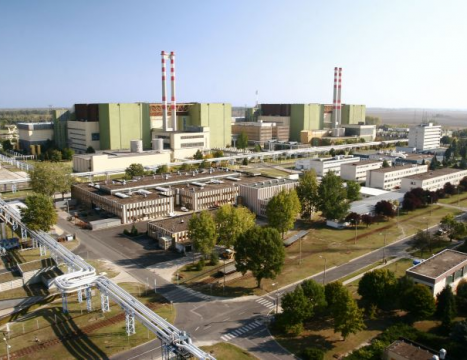
The European Commission (EC) has concluded that Hungary's financial support for the construction of two new nuclear reactors in Paks (Paks II) involves state aid. It has approved this support under EU state aid rules on the basis of commitments made by Hungary to limit distortions of competition, a press release by the EC announced today.
Margrethe Vestager, Commissioner in charge of competition, stated: "Hungary has decided to invest in the construction of the Paks II nuclear power plant, its right under the EU Treaties. The Commission's role is to ensure that the distortion of competition on the energy market as a result of the state support is limited to a minimum. During our investigation the Hungarian Government has made substantial commitments, which has allowed the Commission to approve the investment under EU state aid rules."
Hungary plans to grant investment support for the construction of two new reactors on the Paks site in Hungary. They aim to replace the four reactors currently operating at the Paks site, which were constructed in the 1980s and currently account for approximately 50% of Hungary's domestic electricity production. Hungary considers that the construction of Paks II is necessary to replace phased out generation capacity and to address the need for new capacity.
Under the EU Treaties, Member States are free to determine their energy mix and have the choice to invest in nuclear technology. The Commission's role is to ensure that when public funds are used to support companies, this is done in line with EU state aid rules, which aim to preserve competition in the Single Market.
The Commission's state aid investigation found that the Hungarian State will accept a lower return on its investment than a private investor would do. The investment therefore involves state aid within the meaning of Article 107(1) of the Treaty on the Functioning of the European Union (TFEU). These rules require state aid to be limited and proportionate to the objectives pursued in order to be approved.
Hungary has demonstrated that the measure avoids undue distortions of the Hungarian energy market.
In particular, it has made a number of substantial commitments to limit potential distortions of competition:
a) To avoid overcompensation of the operator of Paks II, any potential profits earned by Paks II will either be used to pay back Hungary for its investment or to cover normal costs for the operation of Paks II. Profits cannot be used to reinvest in the construction or acquisition of additional generation capacity.
b) To avoid market concentration, Paks II will befunctionally and legally separated from the operator of the Paks nuclear power plant (the incumbent MVM Group) and any of its successors or other state-owned energy companies.
c) To ensure market liquidity, Paks II will sell at least 30% of its total electricity output on the open power exchange. The rest of Paks II's total electricity output will be sold by Paks II on objective, transparent and non-discriminatory terms by way of auctions.
On the basis of the above, the Commission has approved the measure under EU state aid rules because the amount of aid is limited and proportionate to the objectives pursued, while the distortion of competition caused by the state support is minimized.
 All world news
 Interview

 Full text
 Events


