News

From Bulgaria Bookmark and Share

18.05.2010 16:14
Energy efficiency: only very low-energy buildings to be built after 2020
AUTHOR: publics.bg


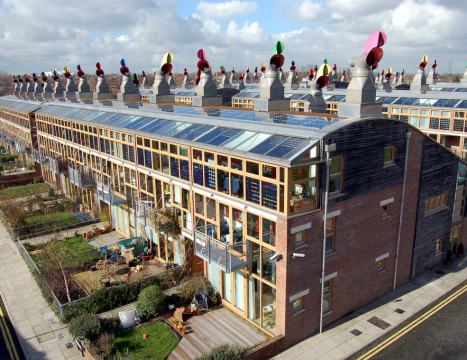
  • © telex4 @flickr.com


Today MEPs approved the EU's new energy efficiency legislation for buildings, which will help consumers to cut their energy bills and the EU as a whole to hit its climate change target of using 20% less energy in ten years' time. Member States will have to alter their building codes so that all new buildings constructed from the end of 2020 meet high energy-saving standards. Existing buildings will have to be upgraded where possible.

Buildings account for around 40% of the EU's total energy use and are Europe's largest source of emissions, so improving their energy performance would help reach CO2 emission goals.

The directive sets out rules for the energy performance of both new and existing buildings. Member States will have to take measures to achieve these requirements at "cost-optimal levels".

Higher standards for new buildings


All buildings put up from the end of 2020 must have high energy-saving standards and, to a large extent, use renewable energy. Public authorities' building projects are to lead the way two years earlier. Part of the funding for these changes will come from the EU budget.

Upgrading of existing buildings


Where feasible the energy performance of existing buildings will have to be improved during major renovations. When renovating, owners will be encouraged to install "smart meters" and replace heating, hot-water plumbing and air-conditioning systems with high-efficiency alternatives such as heat pumps. Regular inspections of boilers and air conditioning systems will be required.

The directive approved at second reading on Tuesday is part of a wider energy efficiency legislative package. The EP's report was drafted by MEP Silvia-Adriana Ţicău (S&D, RO).   A separate report on the new layout of the EU energy efficiency label is expected to be approved on Wednesday.


TAGS: EU | Energy efficiency | buildings 


All news from Bulgaria

No published comments
Login to comment


Interview

20.03.2022  Teodor Bobochikov, Managing Partner, V-Ridium
Energy Transformation – Trends and drivers
Full text

Events

No records in this category!

Poll

What kind of transport do you use to get to work?


We use cookies to ensure we give you the best browsing experience on our website. Find out more on how we use cookies and how you can change your settings.

Cookies

What are cookies ?

A cookie is a small text file that a website saves on your computer or mobile device when you visit the site. Cookies are widely used in order to make websites work, or work more efficiently, as well as to provide information to the owners of the site.

How do we use cookies?

Website use Google Analytics, a web analytics service provided by Google, Inc. ("Google") to help analyse the use of this website. For this purpose, Google Analytics uses"cookies", which are text files placed on your computer.

The information generated by the cookies about your use of this website - standard internet log information (including your IP address) and visitor behaviour information in an anonymous form - will be transmitted to and stored by Google including on servers in the United States. Google will anonymize the information sent by removing the last octet of your IP address prior to its storage.

According to Google Analytics terms of service, Google will use this information for the purpose of evaluating your use of the website and compiling reports on website activity.

We not use, and not allow any third party to use the statistical analytics tool to track or to collect any personally identifiable information of visitors to this site. Google may transfer the information collected by Google Analytics to third parties where required to do so by law, or where such third parties process the information on Google`s behalf.

According to Google Analytics terms of service, Google will not associate your IP address with any other data held by Google.

You may refuse the use of Google Analytics cookies by downloading and installing Google Analytics Opt-out Browser Add-on. The add-on communicates with the Google Analytics JavaScript (ga.js) to indicate that information about the website visit should not be sent to Google Analytics.

Cookies are also used to record if you have agreed (or not) to our use of cookies on this site, so that you are not asked the question every time you visit the site.

Google Analytics Opt-out Browser Add-on

How to control cookies?

You can control and/or delete cookies as you wish. You can delete all cookies that are already on your computer and you can set most browsers to prevent them from being placed.

All about cookies

Managing cookies in your browser

Most browsers allow you to:
  • see what cookies you have got and delete them on an individual basis
  • block third party cookies
  • block cookies from particular sites
  • block all cookies from being set
  • delete all cookies when you close your browser

If you chose to delete cookies, you should be aware that any preferences will be lost. Also, if you block cookies completely many websites (including ours) will not work properly and webcasts will not work at all. For these reasons, we do not recommend turning cookies off when using our webcasting services.
X
} catch(err) {}