News

From Bulgaria Bookmark and Share

16.12.2015 15:26
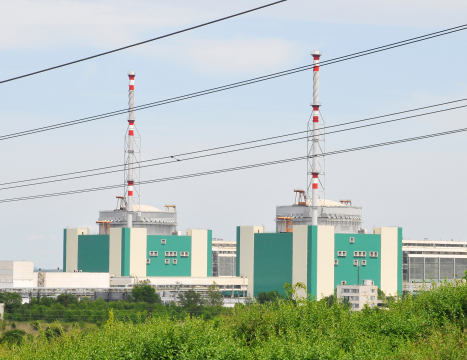
Kozloduy Support Fund Approved New Decommissioning Projects
The Assembly of the Contributors of the Kozloduy International Decommissioning Support Fund (KIDFS) is lending approximately EUR 30 million for decommissioning works in Bulgaria's NPP and experts' salaries
AUTHOR: publics.bg


  • © Kozloduy NPP

On 3rd of December 2015, a session of the Assembly of the Contributors of the Kozloduy International Decommissioning Support Fund (KIDFS) was held in London, UK. The Bulgarian delegation participating in the forum was led by the deputy Minister of Energy, Mr. Zhecho Stankov and with members – the executive directors of SERAW, Mr. Dilyan Petrov, experts from SERAW, the Ministry of Energy and Kozloduy NPP. The Assembly was attended also by representatives of the European Commission (EC) which monitors the spending of the European contributors’ funding and representatives of the European Bank for Reconstruction and Development (EBRD) which administrates the funding. During the sessions, the progress in the decommissioning activities of the last six months was reported and projects provided for implementation in subsequent periods were presented.

As a result of the assessment of the progress of the decommissioning activities, the Assembly approved the signing of new financial agreements (Grants) which will support the implementation of the programme for safe decommissioning of the shutdown nuclear units of Kozloduy NPP. Another important agreement approved in London provides support in terms of the human resources – the salaries of the specialists involved in the decommissioning process for the period 2016-2017. The Contributors approved also the extension of the work period of the international consultancy group for the project management in the next three years. The funding under these two Grants is for approximately EUR 30 million.

“The Assembly of the Contributors approved our proposal as we repeatedly prove our ability and resources for clear and effective project management. Personally, I am very satisfied that we managed to justify the salaries of the specialists working in the specialised Decommissioning division – otherwise the cost of maintaining the people involved in this activity of such high importance such as the management of radioactive waste generated from the nuclear energy production, would fall on the Bulgarian state” – so Mr. Dilyan Petrov commented on the results of the Assembly.

The forum in London was preceded by preliminary preparation and inspection performed during the sessions of the Monitoring Committee of KIDSF and Nuclear Decommissioning Assistance Committee to EC. The meetings took place on 26th and 27th of November in the headquarters of Directorate-General for Energy in Luxemburg where representatives from SERAW and EBRD reported on the implementation of the decommissioning projects funded with European support and presented a Programme for the decommissioning activities to be performed in 2016.

Information published as provided by the Bulgarian State Enterprise Radioactive Waste.


TAGS: Kozloduy | decommissioning | Kozloduy International Decommissioning Support Fund | KIDFS | loan | nuclear energy | energy | Bulgaria 


All news from Bulgaria

No published comments
Login to comment


Interview

20.03.2022  Teodor Bobochikov, Managing Partner, V-Ridium
Energy Transformation – Trends and drivers
Full text

Events

No records in this category!

Poll

What kind of transport do you use to get to work?


We use cookies to ensure we give you the best browsing experience on our website. Find out more on how we use cookies and how you can change your settings.

Cookies

What are cookies ?

A cookie is a small text file that a website saves on your computer or mobile device when you visit the site. Cookies are widely used in order to make websites work, or work more efficiently, as well as to provide information to the owners of the site.

How do we use cookies?

Website use Google Analytics, a web analytics service provided by Google, Inc. ("Google") to help analyse the use of this website. For this purpose, Google Analytics uses"cookies", which are text files placed on your computer.

The information generated by the cookies about your use of this website - standard internet log information (including your IP address) and visitor behaviour information in an anonymous form - will be transmitted to and stored by Google including on servers in the United States. Google will anonymize the information sent by removing the last octet of your IP address prior to its storage.

According to Google Analytics terms of service, Google will use this information for the purpose of evaluating your use of the website and compiling reports on website activity.

We not use, and not allow any third party to use the statistical analytics tool to track or to collect any personally identifiable information of visitors to this site. Google may transfer the information collected by Google Analytics to third parties where required to do so by law, or where such third parties process the information on Google`s behalf.

According to Google Analytics terms of service, Google will not associate your IP address with any other data held by Google.

You may refuse the use of Google Analytics cookies by downloading and installing Google Analytics Opt-out Browser Add-on. The add-on communicates with the Google Analytics JavaScript (ga.js) to indicate that information about the website visit should not be sent to Google Analytics.

Cookies are also used to record if you have agreed (or not) to our use of cookies on this site, so that you are not asked the question every time you visit the site.

Google Analytics Opt-out Browser Add-on

How to control cookies?

You can control and/or delete cookies as you wish. You can delete all cookies that are already on your computer and you can set most browsers to prevent them from being placed.

All about cookies

Managing cookies in your browser

Most browsers allow you to:
  • see what cookies you have got and delete them on an individual basis
  • block third party cookies
  • block cookies from particular sites
  • block all cookies from being set
  • delete all cookies when you close your browser

If you chose to delete cookies, you should be aware that any preferences will be lost. Also, if you block cookies completely many websites (including ours) will not work properly and webcasts will not work at all. For these reasons, we do not recommend turning cookies off when using our webcasting services.
X
} catch(err) {}