News

World news Bookmark and Share

07.05.2015 17:50
Labour Proposes Mandatory Exchange Trading of All Day-Ahead Electricity
The incumbent Conservatives have not focused on making any trading reforms on power but have plans to halt onshore wind subsidies, Platts reported on election day
AUTHOR: publics.bg


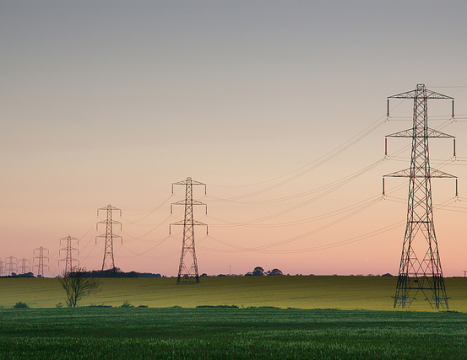
  • © freefotouk, flickr.com

Forcing the UK to trade all day-ahead electricity on exchanges, one of the Labour Party's pledges ahead of Thursday's general election, is viewed unfavorably by certain market participants, but any steps toward greater exchange-based trading may occur only after the competition watchdog completes its investigation into the wholesale energy market, industry participants say.

"At Nord Pool Spot we are not in favor of mandated trading arrangements," Richard Sarti, Nord Pool Spot's UK commercial director, said, as quoted by Platts.

"We feel the long term effect of such a move will be negative; bringing in additional risk and cost to market participants and ultimately the end consumer," Sarti said. Some 40% of the UK's day-ahead power consumption is already traded through Nordpool Spot's N2EX platform, he said.

The platform operates one of the two spot power exchanges in the UK.

Earlier this year, Labour's shadow energy minister Tom Greatrex said that he was "instinctively attracted to mandatory use of the existing exchanges" rather than creating a new "pool" infrastructure.

Echoing a similar sentiment, independent supplier First Utility on March 27 told the Competition and Markets Authority that: "Requiring generators to make all generated electricity available for trade through broker platforms and exchanges would, in our view, increase market transparency and competition to the benefit of downstream market participants and consumers."

The Labour Party in its manifesto pledged that the "Big Six" -- British Gas, EDF Energy, E.ON UK, RWE Npower, SSE and Scottish Power -- will be required to open up their books, and sell their electricity through an open exchange if the party comes to power.

Opposition leader Ed Miliband believes vertically integrated utilities have too much influence on the market. Labour has also proposed to freeze retail household energy prices till 2017.

The incumbent Conservatives have not focused on making any trading reforms on power but have plans to halt onshore wind subsidies. Tight opinion polls suggest there will be no clear winner, opening up space for insurgent parties.


TAGS: Labour Party | Conservatives | election day 2015 | U.K. | Great Britain | power exchange | big six | power market 


All world news

No published comments
Login to comment


Interview

20.03.2022  Teodor Bobochikov, Managing Partner, V-Ridium
Energy Transformation – Trends and drivers
Full text

Events

No records in this category!

Poll

What kind of transport do you use to get to work?


We use cookies to ensure we give you the best browsing experience on our website. Find out more on how we use cookies and how you can change your settings.

Cookies

What are cookies ?

A cookie is a small text file that a website saves on your computer or mobile device when you visit the site. Cookies are widely used in order to make websites work, or work more efficiently, as well as to provide information to the owners of the site.

How do we use cookies?

Website use Google Analytics, a web analytics service provided by Google, Inc. ("Google") to help analyse the use of this website. For this purpose, Google Analytics uses"cookies", which are text files placed on your computer.

The information generated by the cookies about your use of this website - standard internet log information (including your IP address) and visitor behaviour information in an anonymous form - will be transmitted to and stored by Google including on servers in the United States. Google will anonymize the information sent by removing the last octet of your IP address prior to its storage.

According to Google Analytics terms of service, Google will use this information for the purpose of evaluating your use of the website and compiling reports on website activity.

We not use, and not allow any third party to use the statistical analytics tool to track or to collect any personally identifiable information of visitors to this site. Google may transfer the information collected by Google Analytics to third parties where required to do so by law, or where such third parties process the information on Google`s behalf.

According to Google Analytics terms of service, Google will not associate your IP address with any other data held by Google.

You may refuse the use of Google Analytics cookies by downloading and installing Google Analytics Opt-out Browser Add-on. The add-on communicates with the Google Analytics JavaScript (ga.js) to indicate that information about the website visit should not be sent to Google Analytics.

Cookies are also used to record if you have agreed (or not) to our use of cookies on this site, so that you are not asked the question every time you visit the site.

Google Analytics Opt-out Browser Add-on

How to control cookies?

You can control and/or delete cookies as you wish. You can delete all cookies that are already on your computer and you can set most browsers to prevent them from being placed.

All about cookies

Managing cookies in your browser

Most browsers allow you to:
  • see what cookies you have got and delete them on an individual basis
  • block third party cookies
  • block cookies from particular sites
  • block all cookies from being set
  • delete all cookies when you close your browser

If you chose to delete cookies, you should be aware that any preferences will be lost. Also, if you block cookies completely many websites (including ours) will not work properly and webcasts will not work at all. For these reasons, we do not recommend turning cookies off when using our webcasting services.
X
} catch(err) {}