News

World news Bookmark and Share

24.04.2010 17:29
Renewed call for unified air traffic system
© The Financial Times Limited 2010
AUTHOR: publics.bg


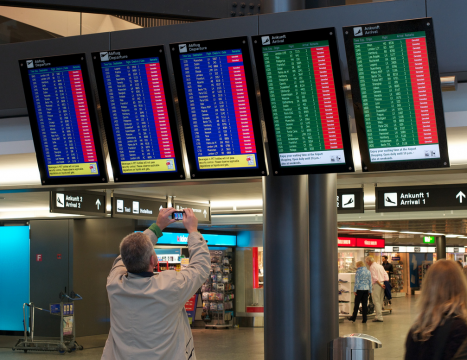
  • © Mike Knell @flickr.com

(FT) Proponents of a unified European air traffic control system are seizing on the havoc wrought by volcanic ash to push an initiative long favored by Brussels and the airlines but resisted by national governments.

They say disagreement between national regulators led to indecision that kept much of Europe's airways closed for almost six days after the eruption of Eyjafjallajökul, the Icelandic volcano, on April 14 released a vast ash cloud across the Continent.

Helen Kearns, spokeswoman for Siim Kallas, the EU transport commissioner, said a single authority would have been able to resume flights within hours once it was determined that a blanket no-fly zone was unnecessary.

It would not have changed the initial decision to ground flights, but "you could have shifted to a more differentiated model much more quickly," she said, calling the current system a "patchwork".

The International Air Transport Association estimates the crisis cost the world's airlines $1.7bn in lost revenue.

Giovanni Bisignani, head of Iata, said: "It is an embarrassing situation for Europe, which, after decades of discussion, still does not have an effective single European sky.

"I was pushing for this when I was CEO of Alitalia in 1991 and I was told not to worry, it would be done," he told the Financial Times.

One stumbling block is how much control EU members are willing to cede. The 27 states are each responsible for their own airspace, a power they have guarded for security and defense reasons.

Unions representing air traffic control workers fear a unified system would result in job losses.

European policymakers and the airline industry have been pushing for an overhaul of the system for at least a decade, arguing that a more co-ordinated approach was necessary to deal with increased air traffic.

Greater co-ordination would also yield more efficient routes, they said, lowering fuel consumption, cutting costs and reducing carbon emissions.

Member states and the parliament agreed last year on Single European Sky framework legislation that would establish a European network manager to oversee air traffic, beginning in 2012. But the details to implement the plan must still be hashed out.

One issue is whether the network manager's recommendations would be binding or voluntary for air traffic controllers. Ms Kearns called it "critical", noting that Brussels favors a binding approach.


TAGS: air traffic | Europe | ash | volcano | Eyjafjallajökul 


All world news

No published comments
Login to comment


Interview

20.03.2022  Teodor Bobochikov, Managing Partner, V-Ridium
Energy Transformation – Trends and drivers
Full text

Events

No records in this category!

Poll

What kind of transport do you use to get to work?


We use cookies to ensure we give you the best browsing experience on our website. Find out more on how we use cookies and how you can change your settings.

Cookies

What are cookies ?

A cookie is a small text file that a website saves on your computer or mobile device when you visit the site. Cookies are widely used in order to make websites work, or work more efficiently, as well as to provide information to the owners of the site.

How do we use cookies?

Website use Google Analytics, a web analytics service provided by Google, Inc. ("Google") to help analyse the use of this website. For this purpose, Google Analytics uses"cookies", which are text files placed on your computer.

The information generated by the cookies about your use of this website - standard internet log information (including your IP address) and visitor behaviour information in an anonymous form - will be transmitted to and stored by Google including on servers in the United States. Google will anonymize the information sent by removing the last octet of your IP address prior to its storage.

According to Google Analytics terms of service, Google will use this information for the purpose of evaluating your use of the website and compiling reports on website activity.

We not use, and not allow any third party to use the statistical analytics tool to track or to collect any personally identifiable information of visitors to this site. Google may transfer the information collected by Google Analytics to third parties where required to do so by law, or where such third parties process the information on Google`s behalf.

According to Google Analytics terms of service, Google will not associate your IP address with any other data held by Google.

You may refuse the use of Google Analytics cookies by downloading and installing Google Analytics Opt-out Browser Add-on. The add-on communicates with the Google Analytics JavaScript (ga.js) to indicate that information about the website visit should not be sent to Google Analytics.

Cookies are also used to record if you have agreed (or not) to our use of cookies on this site, so that you are not asked the question every time you visit the site.

Google Analytics Opt-out Browser Add-on

How to control cookies?

You can control and/or delete cookies as you wish. You can delete all cookies that are already on your computer and you can set most browsers to prevent them from being placed.

All about cookies

Managing cookies in your browser

Most browsers allow you to:
  • see what cookies you have got and delete them on an individual basis
  • block third party cookies
  • block cookies from particular sites
  • block all cookies from being set
  • delete all cookies when you close your browser

If you chose to delete cookies, you should be aware that any preferences will be lost. Also, if you block cookies completely many websites (including ours) will not work properly and webcasts will not work at all. For these reasons, we do not recommend turning cookies off when using our webcasting services.
X
} catch(err) {}