News

World news Bookmark and Share

21.08.2014 16:25
Damaged Paks Fuel Sent to Russia
Paks 2 - a Russian-supplied VVER-440 - was shut down at the time its fuel was removed for washing, but did not restarted until 30 December 2006 due to the complications posed by the stranded damaged fuel
AUTHOR: publics.bg


  • © Rosatom

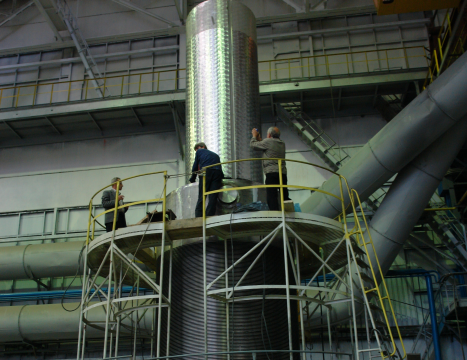
The used fuel assemblies that were damaged during a chemical cleaning process at Hungary's Paks nuclear power plant in 2003 have been transported to Russia for processing, world-nuclear-news.org reported citing information from Russia’s state corporation Rosatom.

Irradiated fuel from unit 2 of the Paks plant suffered damage from overheating on 10 April 2003 when water circulation in a nuclear fuel washing tank was inadequate. The assemblies overheated in the cleaning tank, which was submerged in the transfer pond, so that most became deformed with burst cladding, releasing radioactive material into the water and noble gases into the plant area. The cleaning tank was designed, manufactured and operated by France's Framatome ANP. The event was categorised at Level 3 on the International Nuclear Events Scale.

Paks 2 - a Russian-supplied VVER-440 - was shut down at the time its fuel was removed for washing, but did not restarted until 30 December 2006 due to the complications posed by the stranded damaged fuel.

Russia's TVEL won an international tender for restoration work at Paks 2. The removal of the damaged fuel was completed in January 2007.

The 30 damaged fuel assemblies have now been transported by rail to the Mayak processing plant near Chelyabinsk in the Urals ""where it will be further processed," Rosatom announced. It said that the removal of the fuel was carried out according to a number of intergovernmental agreements between Russia and Hungary.

Paks currently comprises four Russian-supplied VVER-440 pressurized water reactors, which started up between 1982 and 1987. Though originally 440 MWe gross, the units have been upgraded and will be modified further to give 500-510 MWe gross. In 1999, the plant signed a fuel supply contract with TVEL that will run throughout the life of the units, until around 2037.

In early 2014, Hungary and Russia signed a cooperation agreement which included the construction of two new VVER reactors of up to 1200 MWe each at Paks. The first new unit is to be commissioned in 2023, with the second following about two years later. Russia is also to supply fuel for the new units.


TAGS: Paks | Hungary | Russia | TVEL | Rosatom | damaged fuel | nuclear fuel | Framatome ANP | nuclear safety | VVER | deal | reactor 


All world news

No published comments
Login to comment


Interview

20.03.2022  Teodor Bobochikov, Managing Partner, V-Ridium
Energy Transformation – Trends and drivers
Full text

Events

No records in this category!

Poll

What kind of transport do you use to get to work?


We use cookies to ensure we give you the best browsing experience on our website. Find out more on how we use cookies and how you can change your settings.

Cookies

What are cookies ?

A cookie is a small text file that a website saves on your computer or mobile device when you visit the site. Cookies are widely used in order to make websites work, or work more efficiently, as well as to provide information to the owners of the site.

How do we use cookies?

Website use Google Analytics, a web analytics service provided by Google, Inc. ("Google") to help analyse the use of this website. For this purpose, Google Analytics uses"cookies", which are text files placed on your computer.

The information generated by the cookies about your use of this website - standard internet log information (including your IP address) and visitor behaviour information in an anonymous form - will be transmitted to and stored by Google including on servers in the United States. Google will anonymize the information sent by removing the last octet of your IP address prior to its storage.

According to Google Analytics terms of service, Google will use this information for the purpose of evaluating your use of the website and compiling reports on website activity.

We not use, and not allow any third party to use the statistical analytics tool to track or to collect any personally identifiable information of visitors to this site. Google may transfer the information collected by Google Analytics to third parties where required to do so by law, or where such third parties process the information on Google`s behalf.

According to Google Analytics terms of service, Google will not associate your IP address with any other data held by Google.

You may refuse the use of Google Analytics cookies by downloading and installing Google Analytics Opt-out Browser Add-on. The add-on communicates with the Google Analytics JavaScript (ga.js) to indicate that information about the website visit should not be sent to Google Analytics.

Cookies are also used to record if you have agreed (or not) to our use of cookies on this site, so that you are not asked the question every time you visit the site.

Google Analytics Opt-out Browser Add-on

How to control cookies?

You can control and/or delete cookies as you wish. You can delete all cookies that are already on your computer and you can set most browsers to prevent them from being placed.

All about cookies

Managing cookies in your browser

Most browsers allow you to:
  • see what cookies you have got and delete them on an individual basis
  • block third party cookies
  • block cookies from particular sites
  • block all cookies from being set
  • delete all cookies when you close your browser

If you chose to delete cookies, you should be aware that any preferences will be lost. Also, if you block cookies completely many websites (including ours) will not work properly and webcasts will not work at all. For these reasons, we do not recommend turning cookies off when using our webcasting services.
X
} catch(err) {}