

|

|

Sign up for our newsletter to receive the latest news and information from publics.bg


News
World news


 25.07.2014 10:09
© Brookhaven National Laboratory@flickr.com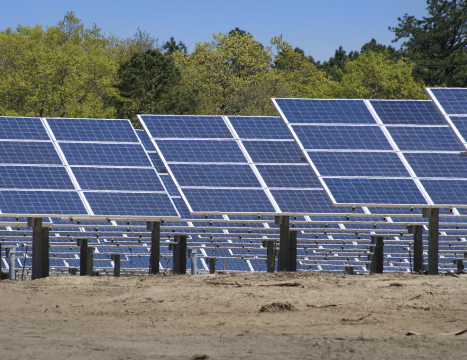
The European Commission has found the new German Renewable Energy Act (EEG 2014) to be in line with EU state aid rules. The EEG 2014 provides support for the production of electricity from renewable energy sources and from mining gas. It also reduces the financial burden on energy-intensive users and certain auto-generators by reducing their level of payment of the EEG-surcharge. Finally, the EEG 2014 provides that the aid will be progressively allocated through tenders which will gradually be opened to operators located in other Member States. The Commission has concluded that the EEG 2014 will further EU environmental and energy objectives without unduly distorting competition in the Single Market.
Commission Vice President in charge of competition policy Joaquín Almunia said: "The EEG 2014 paves the way for more market integration of renewables. In the medium term this should lead to lower costs for consumers. Also, the progressive opening up of tenders to operators located in other Member States is a very positive development for the internal energy market."
In April 2014 Germany notified a draft law for supporting renewable energies. The Commission's assessed its compatibility under the provisions of its new Energy and Environmental Aid Guidelines adopted in April 2014 (the Guidelines, see IP/14/400 and MEMO/14/276). The EEG 2014 will enter into force on 1 August 2014. The yearly budget for the support of renewable electricity is estimated at around € 20 billion.
Producers of renewable electricity will be obliged to sell on the market. They will obtain support in the form of market premiums paid on top of the market price for electricity. Until 31 December 2016 the market premiums will be determined by reference to administratively set reference values. In the case of solar installations on the ground, a pilot tender will be organised. It will determine the level of the premiums and allocation of the aid between participants to the tender. As of 2017, tenders should be generalised but a new law is required to introduce them. The support to renewable electricity is therefore approved until 31 December 2016.
Small installations (below 100 kW) will continue to benefit from feed-in tariffs and are not obliged to sell on the market. This part of the scheme was approved for 10 years.
The support system under the EEG 2014 is financed from the EEG-surcharge that is to be paid by suppliers in respect of the electricity supplied to end consumers in Germany and by auto-generators (i.e. electricity producers for self-consumption). Reductions are provided for energy-intensive users in sectors which are eligible for such reductions under the Guidelines. These reductions are allowed by the Guidelines on competitiveness grounds, since these sectors are both electro-intensive and exposed to international trade.
Reductions are also granted under the EEG 2014 to certain auto-generators. Reductions for auto-generators using small installations are allowed as they are below the de minimis threshold. Reductions for auto-generators using renewable energy sources are also allowed since they are in line with the logic of the EEG-surcharge system. Reductions for auto-generators which are energy-intensive are also allowed under the Guidelines. For other types of installations, the reductions will need to be reviewed and eventually adapted to the requirements of the Guidelines. Germany has committed to review them in due time and re-notify amendments to the Commission by 2017. On that basis the Commission could also conclude that the exemptions and reductions granted under the EEG 2014 to auto-generators were in line with the Guidelines. The yearly budget of the reductions is estimated at around EUR 5 billion.
The tenders to be organised under the EEG 2014 will be opened for up to 5% of the tendered capacity to installations located in Member States which have concluded a cooperation agreement with Germany. Cooperation agreements ensure that the electricity produced in another Member State that would obtain support under the EEG will count towards Germany's renewable energy targets.
Background
In December 2013, the Commission opened an in-depth investigation on the EEG 2012 Act (see IP/13/1283) raising doubts in particular about the compatibility of the reductions for energy-intensive users. This investigation is distinct from the procedure concerning the EEG 2014. The EEG 2012 case will be assessed on the basis of the new Energy and Environmental Aid Guidelines. Germany has already submitted the main elements of the adjustment plan mentioned under paragraph 196 of the Guidelines.
 All world news
 Interview
 Full text
 Events


