News

From Bulgaria Bookmark and Share

29.08.2013 18:21
Bulgaria Adopts New IAEA Radioactive Waste Classification Standards
A new classification of radioactive waste and stricter storage rules have been adopted
AUTHOR: publics.bg


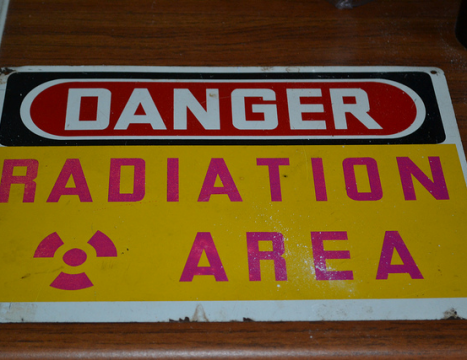
  • © loonhyker@flickr.com

Bulgaria’s Council of Ministers adopted Aug 21 a new Ordonnance for Radioactive Waste Management Safety, while making certain changes in the existing Ordonnance concerning the safe treatment of used nuclear waste. The governmental press-centre announced that the changes in question were made in relation to the Safe Use of Nuclear Energy Act which incorporated a number of European requirements in compliance with the most recent documentation of the International Atomic Energy Agency (IAEA).
 
The first Ordonnance adopts a more structured classification of radioactive waste materials, reflecting the criteria of the IAEA:
 
- The radiation dosage restrictions for the general population have been updated;
- Special criteria for the choice of the geological site for a future radioactive waste storage have been introduced, so that the geology could guarantee the hazardous materials would remain isolated from the environment for no less than t 100,000 years.
- A more thorough plan for closure of the existing nuclear waste storage sites has been forged, as well as responsibility delegation procedure for their control following their shut-down;
- Chapter 10 entitled Management System has been entirely reworked so that it complies with the new concept of transition to an integrated management system following the IAEA safety standards;
 
Major changes in the second ordonnance, concerning the used nuclear fuel, are focused on minimizing the generation of nuclear waste, adopting passive safety, guaranteeing that used fuel is stored under non-critical conditions at all times and maintaining the ionizing irradiation of the personnel and the population at the lowest levels possible without compromising the safety of operations.

TAGS: nuclear safety | nuclear waste | radioactive waste | Bulgaria | regulation | IAEA | International Atomic Energy Agency | energy 


All news from Bulgaria

No published comments
Login to comment


Interview

20.03.2022  Teodor Bobochikov, Managing Partner, V-Ridium
Energy Transformation – Trends and drivers
Full text

Events

No records in this category!

Poll

What kind of transport do you use to get to work?


We use cookies to ensure we give you the best browsing experience on our website. Find out more on how we use cookies and how you can change your settings.

Cookies

What are cookies ?

A cookie is a small text file that a website saves on your computer or mobile device when you visit the site. Cookies are widely used in order to make websites work, or work more efficiently, as well as to provide information to the owners of the site.

How do we use cookies?

Website use Google Analytics, a web analytics service provided by Google, Inc. ("Google") to help analyse the use of this website. For this purpose, Google Analytics uses"cookies", which are text files placed on your computer.

The information generated by the cookies about your use of this website - standard internet log information (including your IP address) and visitor behaviour information in an anonymous form - will be transmitted to and stored by Google including on servers in the United States. Google will anonymize the information sent by removing the last octet of your IP address prior to its storage.

According to Google Analytics terms of service, Google will use this information for the purpose of evaluating your use of the website and compiling reports on website activity.

We not use, and not allow any third party to use the statistical analytics tool to track or to collect any personally identifiable information of visitors to this site. Google may transfer the information collected by Google Analytics to third parties where required to do so by law, or where such third parties process the information on Google`s behalf.

According to Google Analytics terms of service, Google will not associate your IP address with any other data held by Google.

You may refuse the use of Google Analytics cookies by downloading and installing Google Analytics Opt-out Browser Add-on. The add-on communicates with the Google Analytics JavaScript (ga.js) to indicate that information about the website visit should not be sent to Google Analytics.

Cookies are also used to record if you have agreed (or not) to our use of cookies on this site, so that you are not asked the question every time you visit the site.

Google Analytics Opt-out Browser Add-on

How to control cookies?

You can control and/or delete cookies as you wish. You can delete all cookies that are already on your computer and you can set most browsers to prevent them from being placed.

All about cookies

Managing cookies in your browser

Most browsers allow you to:
  • see what cookies you have got and delete them on an individual basis
  • block third party cookies
  • block cookies from particular sites
  • block all cookies from being set
  • delete all cookies when you close your browser

If you chose to delete cookies, you should be aware that any preferences will be lost. Also, if you block cookies completely many websites (including ours) will not work properly and webcasts will not work at all. For these reasons, we do not recommend turning cookies off when using our webcasting services.
X
} catch(err) {}