

|

|

Sign up for our newsletter to receive the latest news and information from publics.bg


News
World news


 13.06.2013 17:31
© IAEA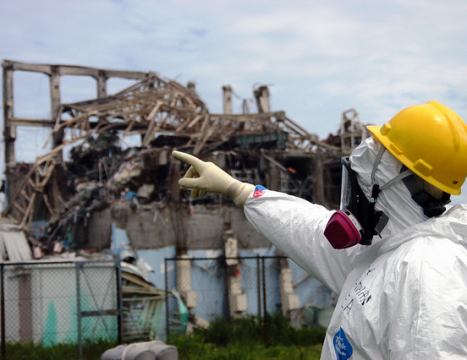
The safety of nuclear energy production is vital for all Europeans. Rigorous safety provisions help ensure that accidents like Fukushima will not happen in Europe. They also guarantee the most efficient response should a nuclear emergency nevertheless occur.
With today's proposal, which amends the nuclear safety directive from 2009, the European Commission sets out EU-wide safety objectives to significantly reduce the risks and protect people and the environment. By introducing a system of regular European peer reviews, increasing transparency on nuclear safety matters and strengthening the powers of national regulators, the directive aims at continuous improvement of nuclear safety across the EU.
Energy Commissioner Günther Oettinger said: "It's up to Member States to decide if they want to produce nuclear energy or not. The fact remains that there are 132 nuclear reactors in operation in Europe today. Our task at the Commission is to make sure that safety is given the utmost priority in every single one of them."
The new directive establishes:
Safety objective: Member States shall ensure that – in case of accidents - the release of radioactivity in the environment is practically eliminated.
EU-wide, legally binding reviews every six years: Member States will jointly agree on the specific topic (s) and the common methodology of the reviews that multinational teams will carry out. Member States are also responsible for implementing the recommendations. In case, there is a delay or recommendations are not implemented, the European Commission can organize a verification mission to the Member State.
National reviews: Every nuclear power plant undergoes a periodic safety review at least once every 10 years and a specific review in case of a possible life time extention;
New Power Plants: All new nuclear power plants are designed in a way which ensures that if a reactor core is damaged, this has no consequences outside the plant;
On-site emergency preparedness and response: Every Nuclear Power Plant needs to have an emergency response centres which is protected against radioactivity and earthquakes or flooding and implementing strict accident management guidelines;
As to transparency, national regulatory authorities and plant operators will have to develop a strategy, which will define how public is informed in the event of an accident, but also in times of normal operation of the plant. This strategy will have to be published. In addition, citizens will have the opportunity to participate in the decision-making process when the licensing of a new nuclear power plant is being chosen.
Finally, the directive ensures that national regulatory authorities are independent in their decision-making and that political, economic or societal interests cannot override safety objectives. National regulatory authorities must be allocated sufficient funds and expert staff to allow their effective operation.
Background
Following the nuclear accident in Fukushima in March 2011, the EU heads of state and government asked the Commission, together with the European Nuclear Safety Regulators' Group (ENSREG), to carry out stress tests and to review the EU nuclear safety legislation.
In addition to lessons learned from Fukushima and the stress tests, the proposal is based on various sources of expertise, notably ENSREG, the group of scientific experts established under the Article 31 of Euratom Treaty, International Atomic Energy Agency (IAEA), Western European Nuclear Regulators Association (WENRA), reports from non-EU countries such as Japan or the US, etc. It also takes into account the views expressed by stakeholders, including national regulators, industry and civil society.
 All world news
 Interview
 Full text
 Events


