

|

|

Online Newsletter
Sign up for our newsletter to receive the latest news and information from publics.bg
Sign up for our newsletter to receive the latest news and information from publics.bg


Interviews


 30.08.2011
Facility management is even more connected to public procurement
Fred Kloet, Vice President of the European Facility Management Association
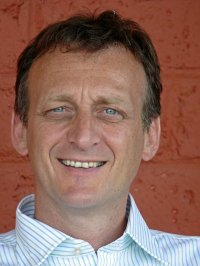
Fred Kloet is Vice President of the European Facility Management Association since December 2009. He is director and founder of VILLA FM Nederland and Villa FM Srl Italy - consultant companies in the area of facility management. Mr. Kloet is Bachelor of FM from Hoge School Diedenoort. He is the driving force of the EuroFM Association since 2010.
Mr. Kloet, in your opinion, what was the effect of the European financial crisis on the facility management business?
There are two main effects. First, we were asked to do some radical cost cutting. Consultants not having the right skills and experience lost their projects. The cost cutting however gave us the chance to show how much fat some end-users still have in their budget or workspace and what the value is of their ‘FM comfort’. So, the added value of FM has become clearer in both ways. However, the downside is that we had to be more stringent in our collaboration with service providers. No more investments frills. Back to the core business. Looking for the long term collaboration on one hand to avoid direct investments, while looking for short term savings. The positive outcome is the increase of attention for client/service provider competences.
Then, it looks as if a new wave of outsourcing is developing in a more diverse way. The business services orientation is gaining momentum. It looks as if FM is going to be the sector where all services can be outsourced to.
In the news we have seen examples of how the UK is trying to bring transparency and best practices in terms of public-private partnership in the public sector facility management operations. Is it actually a growing trend and would it be beneficial for the European market?
Simple answer: it is happening in other countries already as well. But it is more often connected to the subject of public procurements. The problem is that FM sector representatives from the UK do not yet share structually their knowledge with EuroFM and their members. If this remains a national instrument for competition, the European level FM contracts will be more difficult to realize. Take the EN15221-6 Space and Area Measurement. If the national FM sectors do not push this standard, FM will not be able to show the European Commission what its societal and economical added value is.
What are the goals of EuroFM in terms of European Commission policy making?
Participate in calls, mandates, programs, etc. Write proposals. Represent the European FM sector as defined in the EN15221. Capitalize on the EN15221. Deliver market data to the Commission. Lobby for being involved in policy making groups. Activate our national members to network in Brussels for our research, educational and practice strategies and projects. We have to make clear to the European Commission the FM sector represents 5% of EU’s GDP and is the representative of workspace users.
EuroFM is working very closely with the European Union. How could the association contribute to achieving the EU 2020 targets?
In 2010 FM has been identified by the European Commission as a player in the business services sector and has been named as a significant contributor to the new Single Market Strategy and Industry Policy. CEN, the European Normalization Committee, transferred FM from construction to services. As of 2011, we will communicate the EuroFM EU2020 Agenda to politicians and policy makers.
The eight flagships of our agenda are as presented at the European Parliament November 2010:
Interoperability
The FM sector represents the end-users of the assets. Based on PPP and DBFMO experiences, the financial risks of not including FM in the design and finance of a construction project have become evident. This explains the need for interoperability and involvement of FM in BIM (Building Information Modeling). In 2011 - 2013 we will focus on influencing the finance and construction sector. Also, the developments of a New World of Work supported by ICT and employee engagement are closely connected to interoperability. The need for connecting FM with the Digital Agenda of the European Commission is obvious. EuroFM will survey its members on this topic to make the connection.
Productivity
More and more we start realizing that the built environment is only one of the variables determining productivity. Virtual and mental elements increased in relevancy. The main strength of FM, integrating the virtual, mental and physical, has put FM in a key-position to ‘crack the productivity nut’. This will allow the end-users to make well-informed decisions on how to facilitate the workforce. A whitepaper will explain FM is an asset worth investing in by pension funds and banks. EuroFM will also liaise with the ISO Asset Management project to capitalize on this strength.
Employment growth
In the ‘Outsourcing TOP 100’ of the International Association of Outsourcing Professionals six of the first 14 positions are for facility services providers. The growing outsourcing of business services explains the potential of the European FM sector. If FM becomes the driving Business Services representative both turnover growth as well as employment growth is logical. This makes it even more needed to participate in the new ISO outsourcing project that will be started in 2011.
Transparency and Competitiveness
Four new EN15221 standards were accepted this year (quality, processes, taxonomy and space & area measurement). The standards are an important tool to raise the FM image. Benefits of implementing are increased competitiveness of service providers and an increased market transparency. The EN15221-6 on space and area measurement will help create occupancy cost transparency.
Reduction of poverty
The European FM sector has been estimated € 640 billion large while delivering work to 40 million FTE each year. By growing our sector and professionalizing FM in general the potential for poverty reduction are eminent. This means FM takes its social responsibility. Till 2013 EuroFM will facilitate a platform focused on promoting working in FM as an alternative to poverty.
Skills growth
In 2011 we will deliver the European FM Competency Model. Currently the list of skills and competencies vary per country and educational level. The model will help create transparency. This will help boost FM productivity and cross-border hiring. It will also allow professional development in countries where FM is still emerging and in need of education. From 2011 till 2013 EuroFM will focus on creating a unified and easy to enter educational FM market in Europe. While doing so a special attention will be given the European countries where FM education does not exist yet.
Sustainability
The World Business Council for Sustainable Development discovered developers, builders, contractors, regulators and financiers are creating the largest barriers against energy efficiency in buildings. At the same time the (end-)users, represented by FMs, have little influence on programming the daily energy use. By 2013 EuroFM will focus on promotion of programs that create behavioral changes of users. We will also promote the development of smart areas and spacess, or the so called "smart m2's".
Public finances constraint
Running offices on day-to-day bases gives public sector facility managers a unique position to adjust public spending. Government building agencies should focus more on user needs than the needs of developers, architects and builders. EuroFM will address this subject with the responsible Commissioner to help create a European Workspace Facilities and Services Platform. This will help the public sector to define a new vision on the integration of people, place and processes leading to a new world of work for the public sector that will deliver a constraint in public finances.
 All interviews
No published comments
Login to comment
 Interview
 Full text
 Events


