

|

|

Sign up for our newsletter to receive the latest news and information from publics.bg


Interviews


 03.09.2010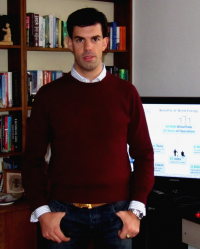
Mr. Noethlichs, what are the main objectives of the Bulgarian Wind Energy Association, which was founded in the end of June this year?
- Formally we founded the Association in the end of June. But as a group of companies we have been working together for more than half a year – the end of 2009 when the Ministry of Environment and Water started talking about a moratorium on renewable energy. We noticed that there is no association uniting all the companies in the sector. After we met several times, we decided to make the Bulgarian Wind Energy Association (BGWEA) and it started working surprisingly well.
BGWEA will have more than 30 members by the end of September and by now unites the majority of the experienced, reputable and responsible companies active in the Bulgarian wind energy sector. We have manufacturers, developers, financial consultancy companies, banks, investors, law firms – everyone is on board. The whole initiative is non-profit and none of us gets paid for it and every member company provides their work for free.
In BGWEA we have united with the objective to improve the wind energy sector for all stakeholders. This means for the public we work to deliver sensible, effective and clean energy for the future while working to improve the understanding of wind energy and renewable energy in general. For the government we work to be a trusted, reliable partner in further improving the stability and efficiency of the legal and regulatory framework. With NGOs and grid operators we work proactively to identify and address concerns and to find sustainable solutions.
And lastly, for the wind energy sector we work to improve business conditions by promoting strong principles of best practice and by uniting a tremendous amount of knowledge and experience.
The association’s start coincided with the publication of the new Bulgarian Energy Strategy as well as the new National Renewable Energy Action Plan. What is BGWEA’s position on these two strategic documents?
- We have a very profound review of the National Renewable Energy Action Plan and everyone can download it from there. We did not focus on the Energy Strategy, the Association of Producers of Ecological Energy did this. We got the final Plan just before it was submitted to Brussels so we had to work over the weekend on it. Luckily, some of our feedback did get into the final version. Nevertheless, we still believe that the Plan needs further revision. Most of all the forecasted levels of renewable energy are dangerously low and need upward revision. At their current level they would expose Bulgaria and all of us here to considerable financial risk from the failure to meet the EU 2020 climate targets.
We did a rough comparison and if in 2011 Bulgaria runs short on renewable energy requirements, which will be binding, this will cost a lot more than investing in green energy. For instance, if the country is 1% short on renewable energy, this will cost about 150 BGN per household according to our estimates. Building renewable energy would cost only a little fraction of this amount. The assumption is that other EU countries would be ready to sell renewable energy to Bulgaria only at a cost higher than the amount they invested to produce it. Probably they will sell a mix of solar and wind energy at a price 300-400 BGN for MWh, which makes it really expensive compared to the local prices.
There needs to be an understanding about this matter in the country and more coordination between institutions.
There were some ideas for replacing the feed-in tariffs with other types of renewable energy support in Bulgaria. What is the Association’s position on this matter?
- There was a lot of talk about having tenders in Bulgaria instead of feed-in tariffs. Different countries in the EU have tried different models. By now the majority does feed-in tariffs, some do quotas with green certificates trading, and some tried tenders for new capacities. Hungary tried tenders and stopped them now. They needed 420 MW and decided to give them to the lowest bidding price for the energy produced and the outcome has been that the tender has been delayed and stopped again and again. The experience and EU-studies on this show that feed-in tariffs are the cheapest solution, the next best is quotas and the worse system is tenders. The reason for this is that tenders include so much uncertainty that a company like mine, “n-vision energy”, for instance, would never go in such countries. I would have to work and invest for 3-4 years and then hope that maybe I will be able to realize under those conditions.
Feed-in tariffs lead to the lowest cost and give the government the most control. If the country reaches enough renewable energy, it could simply reduce the tariff a lot. This should be valid for new projects, which will receive a fixed price for the whole period. Thus the regulator can decrease feed-in tariffs for the next projects without having the problem of depreciating the income of capacities that are already built. This is a normal approach, which gives more flexibility to the regulatory body.
The power sector in Bulgaria now has the final new Electricity Trading Rules by the State Energy and Water Regulatory Commission. According to your association, will these new rules enhance or worsen the position of wind energy producers in the national electricity market?
- The new trading rules have been published on August 7 and are in effect now. Under the new rules renewable energies will now be included in balancing groups, every project by itself, which does not have any sense. This is troubling for a number of reasons. Firstly, it adds additional expenses to renewable energies. Forecasting on a project-by-project level is less accurate than forecasting on a nationwide level as is the standard practice in other EU countries with extensive experience in renewable energy. It is also vastly more expensive. Essentially this means that projects need to forecast their energy production and inform the grid operator of this forecast. Whenever a project then falls outside a +/- 20% corridor of its forecast it needs to pay to the grid operator. From my experience as an energy trader for Goldman-Sachs in London, it is normal to forecast renewable energy for a whole country with an accuracy of +/- 5%. Individual projects have much more risk and it does not have sense to make these forecasts.
Next it adds financial uncertainty to the projects as the financial risk from being outside the +/- 20% corridor is hard to assess. This means that financing conditions will get worse if not even impossible. Lastly, the trading rules are effective immediately and yet, no balancing groups, no mechanism, no software and no structure have been set up.
This means the trading rules worsen market conditions and increase the price of renewable energies which in turn increases prices for consumers and again exposes all of us to financial risk from the failure of meeting the EU 2020 targets.
In my opinion the balancing should be done by the grid operator – they are in the best position to do this. They will be able to get the data of all wind energy producers, their location, so they will be able to make a reasonable forecast for the whole country and will know how to balance it. And they should be compensated for this through the grid prices. Otherwise only big energy companies will be able to build wind capacities as they will be the only one to take such large risk. And in the end this will lead to higher prices of renewable energy.
In the last several months wind energy development was put in confrontation with the preservation of arable lands in Bulgaria. In your opinion, what should be the right solution to this problem?
- This confrontation is an artificial one. It is shocking in a way, because it is pointless. For the wind turbine and the crane we need less than 1 decare. You can farm without problem around them and we have shown this with photos on our website.
Decades of experience from countries with nearly a hundred times more wind power installations than Bulgaria have proven that wind energy and agriculture work together just fine. In fact, our experience is that small farmers and land owners are usually happy to welcome wind energy projects onto their land, because it brings them additional income from several thousand euro, which allows them to invest in their business. Hundreds and thousands of family farms across Europe would not have survived without wind energy projects.
The confrontation was created by a few large agricultural mass producers who want to get cheap access to the land and they work against the interest of land-owners. The right solution to this is to remove the provisions from the proposed changes to the law which ban renewable energies on agricultural land. The remaining provisions of the law will help calm down the market and drive speculators off the land. If the ban, however, stays it will almost certainly mean that Bulgaria will miss the EU 2020 targets starting as early as next year. This in turn means that while a few agricultural mass producers benefit, all of us have to pay the bill. This is unfair.
Lastly, not a single other EU nation has a ban like this. Adopting the law like this would hurt Bulgaria’s reputation as a reliable investment destination. The discussion of the law has already driven potential investors away from the country. This means lost investment and lost jobs. This needs to stop. We hope that in the end of September the texts will be changed. Some good amendments have been submitted already.
Many experts believe that in several years wind energy will reach grid parity with conventional electricity generation. When do you expect grid parity in Bulgaria and the SEE region?
- Wind energy is actually cheap. When you add the future carbon costs to coal, it will become more expensive than wind. If you look at the market wholesale prices, they are actually higher than the feed-in tariffs. For the final consumer in Bulgaria the end prices are regulated and unrealistically low. Once they go to free market prices, wind energy will be cheap and can keep costs down.
Actually, I believe we are already at the point where we have reached grid parity. When you look at the total cost of power generation and when you include the cost of carbon emissions, wind energy is not just a clean source of energy, it is also one of the cheapest sources of energy.
Usually people compare wind, nuclear and coal and ask whether we should have one or the other. It is a pointless debate, because you need a mix of all of them. Some of the power stations can only provide base loads, others may provide balancing power and you need a mix of them, together with wind as a sensible component.
What’s more important still is that for years now wind has also been the fastest way to bring additional generating capacity online. The lead times for bringing new thermal or nuclear power stations online is continuously increasing. You are now often looking at more than 10 or even 15 years. Wind projects take only a fraction of this time to realize. This is, why our industry is now an important pillar of the future of future energy supply and energy independence.
What are the possibilities to balance wind power with other power plants? And do you think that the regional market development will support the development of renewables in the country?
- The exciting fact about Bulgaria and some of the neighboring countries is the large amount of hydro-power. It is a good factor for balancing the market. Bulgaria is in position to balance its market through hydro – something which is not valid for Northern Germany or Spain. We think it will be actually possible to integrate a large amount of renewable energy in Bulgaria without too much trouble.
Regional market integration will support renewables integration. Germany has 25000 MW of wind capacity and needs Nordpool and most of all Norway for balancing in that region. In the Balkan region there is much hydro power, just like in Norway, that can help balancing the local market. Bulgaria may balance itself and also some neighboring countries like Greece, which has an energy deficit in summer. The country has strong interconnection links to Turkey and Romania as well, which will make balancing easier. Bulgaria is positioned on the road of regional power flows and can use that for its own benefit.
____________________
Sebastian Noethlichs is the managing director of “n-vision energy”, the Bulgarian office of his family’s renewable energy business. Having grown up with the renewable energy industry from an early age, he joined the family business full time in 2005. In 2007 he established n-vision energy and moved to Sofia.
Sebastian is the first executive director of the Bulgarian Wind Energy Association (BGWEA). He is the chairman of the working group on energy of the Germany chamber of commerce and a member of the American Chamber of Commerce’s working group on renewable energy.
Prior to this Sebastian was an electricity and emissions options trader for Goldman Sachs in London. He serves as chairman of the board of NEVAG, a German renewable energy holding, since 2004. In his free time Sebastian is an avid reader and cross country runner.
Sebastian holds a Bachelor’s degree in management from the London School of Economics. Before university Sebastian studied in the USA on a scholarship by the US Congress and German Bundestag. He has lived and worked in Germany, the USA, the United Kingdom and Bulgaria.
 All interviews
 Interview
 Full text
 Events


