

|

|

Sign up for our newsletter to receive the latest news and information from publics.bg


Interviews


 03.06.2016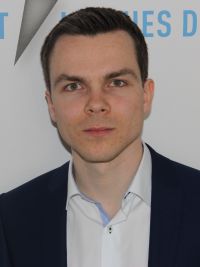
Mr. Pellerin-Carlin, during your presentation in Sofia you spoke about the transition from traditional energy sources to a decentralised sustainable energy sector. What are the main steps towards doing this?
The energy transition is critical to mitigate a climate change that is already painfully impacting human life and economy. It is also a way to build more secure and sustainable energy systems to provide energy services at an affordable cost to all households and businesses. This transition walks on two legs: efficiency and renewables.
Energy efficiency allows providing the same energy service while consuming less energy. With the currently available technologies, our cars could consume two to three times less oil than they currently do, our buildings could consume at least four times less than they currently do. Such an energy efficiency revolution implies changes in the regulations politicians pass, the technologies we use, the investments we make and our everyday behaviours. Many energy efficiency projects are highly profitable but are not performed simply because nobody in a household or a business ever thought of saving money by performing such projects. Policy makers can play a critical role by setting minimum energy efficiency standards, such as deciding that, by 2025, no car can be sold in the European Union if it consumes more than 2 litres/100 km.
The second leg of the energy transition is the development of renewable energy production. This largely relies on locally available energy sources: biomass, hydropower, biogas, tidal energy, and obviously, wind and solar. Many renewable technologies (e.g. hydropower, biomass, onshore wind) are already often cheaper than their competitors. Solar remains expensive but its costs are shrinking dramatically, and this dynamic could make solar cost-competitive in Europe in the few years to come. At the national and EU level a lot can be done to interconnect the European electricity grids to ensure a secured and cost-effective flow of electricity all over Europe.
The Energy Union concept has been one of the hot topics of the past year. Where is the EU now in terms of reaching the declared Energy Union goals?
The Energy Union is a young concept originally proposed by Jacques Delors and Jerzy Buzek six years ago. It has been a core element of the Jacques Delors Institute’s work, before being adopted by the European Commission last year.
The European Commission sees this year 2016 as the ‘year of delivery’, meaning that it will make most of its Energy Union proposals this year. It is then up to the European Parliament and European governments to start negotiating on all those policy proposals in order to reach an agreement. The aim would ideally be to create the regulatory framework that speeds-up the energy transition, makes it more cost-effective and better serving the interests of households, businesses and citizens. But many actors already lobby parliamentarians and governments to preserve their personal interests, even at the expense of the interest of Europe.
For the EU’s Energy Union, the first big decisions will not be taken before 2017. We are therefore witnessing the first steps of a far-reaching transformation of our energy policy and systems that will continue to evolve in the decades to come.
What is the current situation with the development of a new legislative package for the implementation of the Energy Union? Are we going to see soon a “Fourth Energy Package”?
In the past twelve months, the European Commission made proposals on the EU carbon market, on the governance of the Energy Union and on the security of gas supply. Ahead of us are decisions regarding the role of consumers, of innovation, as well as the creation of a new electricity market design. Some will most certainly try to label this as a “Fourth Energy Package”. But what is truly needed is an “Energy Union Package” that tackles in one single negotiation all the elements of the Energy Union: climate goals, security of supply, taxes on pollution, renewables, energy poverty, energy efficiency, market design, energy relations with Russia, financial public support etc. For the Energy Union to deliver, politicians have to overcome the Brussels’ business as usual attitude of thinking within silos that make bureaucratic sense but impeach having a coherent approach of the energy transition.
Is it possible for Europe to have joint negotiations with its biggest gas supplier – Russia, instead of keeping natural gas supplies as a national-level matter?
It is possible and desirable, especially in the context of Nordstream 2. Europeans are stronger together, and weaker when they are divided. This is clearly understood by citizens with 80% of them being in favour of energy solidarity. In this area, like in many others, citizens are far more modern and far more pro-European than politicians, who often confuse the interest of a national energy company with the interest of the citizens.
In concrete terms, the European Commission should ask European governments and the European Parliament to give a mandate to negotiate an EU-Russia Treaty on gas, on behalf of the EU. Something similar has already been done for the Trans-Caspian Pipeline and the electricity situation of the EU Baltic States. What is currently lacking is political will, i.e. the will to transform what EU citizens want into a reality.
In February 2016, the European Commission proposed that gas contracts should be assessed by the European Commission before it is signed –while it is currently assessed only after signature. This very limited step forward is already opposed by some countries, especially Germany, that voice concerns of national sovereignty but is actually defending their national economic interests of becoming the European gas hub, even at the expense of the European geopolitical interest voiced by many, especially Poland.
What other risks to energy security do you perceive besides gas supply, and especially keeping in mind South Eastern Europe?
Many rule out the possibility of a disruption of oil supply. They think that currently low oil prices reflect a structural over-abundance of oil. The Middle-East remains the key oil producer. This region is everything but secure. Iran and Saudi Arabia are in a Cold War situation, with open warfare between Iranian troops and Saudi-supported troops in Syria, and Saudi troops and Iran-supported troops in Yemen. If the situation heats up, it may provoke a severe disruption of oil supply and/or surges in prices. Those most affected will be the poorest, and they are less able to afford an overly-expensive oil barrel. In Europe, those countries are south-eastern countries, especially Romania and Bulgaria.
This is one reason why it is critical to diminish our oil consumption, particularly in the transport sector. The short-term priority is to set energy efficiency regulation for all vehicles, phase out fossil fuel subsidies and increase taxes especially on the poorly taxed oil used for road freight transport and airplanes, as to favour the development of more efficient transport. In the medium-term, electric vehicles will develop fast, and public authorities can help by creating regulatory niche markets for non-oil vehicles, especially for small vehicles like electric scooters. But electric vehicles are only clean if the electricity used is coming from renewables, so the development of electric vehicles should advance as renewable electricity production grows, but should not come faster than it.
Another concern is about electricity supply. The EU currently faces a situation of electricity over-production as neither the EU nor Member States took decisive decisions to close old coal power plants, despite such plants behind inefficient, a key cause for climate change, and the likely cause for the death of thousands of Europeans because of air pollution. Yet, electricity supply concerns are growing as a result of the development of renewable electricity production, representing up to 50% of the electricity supply in some areas, such as Northern-Germany. The concern is: when your electricity is coming from wind turbines and solar panels, what happens when you have long periods with no wind and no sun?
This concern is real but is often over-amplified by some energy companies that use it to get more public subsidies in the form of so-called capacity mechanisms and capacity reserves. With serious energy efficiency and demand-side management measures, electricity demand from consumers (i.e. businesses and households) will not increase drastically and will become much more flexible, thus enhancing security of electricity supply. Another critical element is the interconnection of the European electricity grids. Europe has such a diverse geography that there is always wind and sun somewhere in Europe. To put it simply, an EU-wide electricity grid would allow the British and German wind to power southern Europe when needs be, Spanish and Bulgarian sun to power Northern Europe when needs be, and Alpine and Scandinavian hydropower to power Europe when needs be.
Questions by Lyudmila Zlateva
This interview was taken after the discussion "Energy Union: Effects and Consequences for the civil society in Bulgaria", which took place in April, 2016, in Sofia.
The interview was also published in Bulgarian in the June issue of Utilities magazine. See Bulgarian transcript here.
------------------------
Thomas Pellerin-Carlin is a research fellow at theJacques Delors Institute, working on european energy policy and european defence policy.
After an experience in a consultancy (Europroject, Italy, 2010) et within the French Army (13th Mountain Infantry Regiment, France, 2011), Thomas joins the French Administration (General Secretariat for European Affairs, France, 2012) before becoming Academic Assistant (College of Europe, Belgium, 2013-2015), and Research Assistant of the European Energy Policy Chair (College of Europe, Belgium, 2014-2015).
He also took part in the SPECQUE: Euro-Canadian European Parliament Simulation (2010-2015) of which he was Executive Vice-President (2013-2014).
Thomas is a graduate of the College of Europe’s Master in European Political and Administrative Studies, Bruges (2012-2013, Václav Havel Promotion) and of theLille Institute of Political Studies (2007-2012, Promotion George Orwell),
His main fields of interest are energy policy, climate policy and european defence policy. His working languages are english, french and italian. He is also active on twitter: @ThPellerin.
 All interviews
 Interview
 Full text
 Events


