

|

|

Sign up for our newsletter to receive the latest news and information from publics.bg


Interviews


 11.06.2010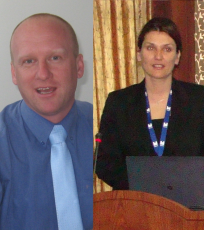
In technical aspect, what are the main challenges for infrastructure development in Central and Eastern Europe?
Josef Třetina: The main challenge facing our region is the detailed design of projects, meaning both in terms of future planning of city development and specification requirements for quality construction, not only with a guarantee for 5 to 10 years but also with focus for the quality of materials used. Investors should invest time in preparing the projects with detailed characteristics of quality construction, not only consider entering the tender documentation and keeping deadlines.
Hana Staňková: In my opinion, one of the challenges is cancellation of local national standards that have been replaced by European norms that are rather methodical instructions than technical guidelines. I can see that in Western Europe, EU standards are referring to national regulations that are linked with local professional requirements and such structures are missing in the Central and Eastern Europe.
Another question is missing “real”, measured input data from the different existing water or sewerage systems and their usage for future development or renovations, meaning calculations and designs are not based on outputs from systematic data collection, i.e. GIS systems.
Last but not least issue I would like to mention is planning and actual development of water and waste water systems. From our experience it seems to that some projects are rather fixing actual local problems that being integrated solution considering future development.
Which of the good practices in managing infrastructure projects in Central and Eastern Europe could be transferred in all of the countries in the region?
H.S.: One of the most important tasks should be overall project planning. Technical solution should be supported by financial aspects, not only the costs of the construction but also future related operational expenses. Our experience is also to pay attention to technical solutions, using quality materials and technological methods with focus on long life cycle. Securing the project standards preferably by designers and operators/ investors.
What are the good practices from the Czech water and wastewater infrastructure sector?
J.T.: Setting the quality standards for new construction networks and for reconstruction of old networks. These used standards are higher compared with new European standards; it is achieving a higher overall quality of the work.
H.S.: In the Czech Republic, there have been historically very well planned central drinking water systems, considering future development of the regions. That is why waste water treatment plants and sewerage systems have been the main focus of the last 20 years, also supported by EU programs. The most common approach has been central treatment plants being collecting waste water from bigger zones with high cleaning efficiency rather than local treatments with output quality fluctuation.
What is the position of Hobas in Central and Eastern Europe in terms of supporting the exchange of experience?
J.T.: It is one of our core missions. It is necessary to point out both the good and bad examples. From experience, we can learn and improve in that what we are mediocre, and use of knowledge both for our customers and for our workers.
H.S.: I think that this topic is actually one of the strength of HOBAS because we focus on sharing of our experience, technical support and also the company quality standards proven by HOBAS history. We have been organizing several seminars in different countries, we are also taking our customers to our production plants. I.e., HOBAS Austria opened a new technological centre in April 2010. HOBAS people supported by HOBAS historical experience are members of different professional associations (such as No Dig – CzSTT, professional committee for normalization, GRIS, water associations, etc.) and are being frequently invited for expertise and different conferences.
What are your expectations from the seminar in Bulgaria that you held on June 2-4 this year?
J.T.: That people of different nationalities will be more close to each other and that they “partially” transmit their experience with HOBAS material as well.
H.S.: I believe that by organising such seminars, HOBAS is managing to describe ways how and where to use our systems to satisfy the end costumers, to explain and share our experience from different markets, applications and installation methods, to discuss challenges and also to listen our partners and learn from their experience.
This all I could also experience during HOBAS Bulgaria conference in Varna where were present technical people from at least 7 different countries and were able to share their knowledge as well as enjoy the informal discussions during the evening. I believe that also Bulgarian experts are able to share their projects and knowledge with HOBAS even in the future and I wish them all the best and thank you this way for their presentations.
 All interviews
 Interview
 Full text
 Events


