

|

|

Online Newsletter
Sign up for our newsletter to receive the latest news and information from publics.bg
Sign up for our newsletter to receive the latest news and information from publics.bg


News
World news


 30.01.2012 16:49
EU Fights Unemployment with Energy Policy
It's estimated that that energy efficiency alone could generate 500,000 jobs in the years up to 2020
- Climate Commissioner Connie Hedegaard
© European Parliament@flickr.com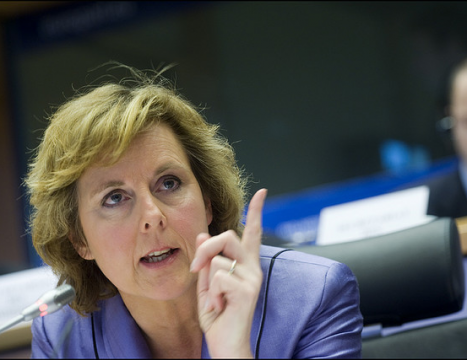
The European Union may pass a triple whammy environment policy in the first half of this year that would bring a rapid jobs boost, cut energy bills and improve the environment by one simple measure: keeping Europe's buildings in good repair.
Climate Commissioner Connie Hedegaard said the EU Energy Efficiency Directive includes a commitment to retrofit a certain number of public buildings each year, improving insulation and stopping leaks.
"We have proposed a percentage of 3 percent a year, and that's out of an employment perspective as well," she said at World Economic Forum at Davos, as quoted by Reuters.
"One of the few things that can create jobs very, very fast in Europe is if you actually doing something with retrofitting pipes, retrofitting energy systems, retrofitting houses - that creates jobs very, very quickly after you have adopted these kind of policies. There are not so many other issues that can do that."
With Europe's economy in the doldrums because of the euro zone debt crisis and unemployment at 9.8 percent in November, politicians are desperate for ways of providing growth but unwilling or unable to pay for a stimulus package.
"It's estimated that that energy efficiency alone could generate 500,000 jobs in the years up to 2020. But we also have other initiatives in the climate field where all in all there is the potential of creating 2 million new jobs up to 2020, if we get it right.
"It's a sector where they could actually have the labour in there very fast."
Companies that might benefit from a revamp of public buildings include insulation specialists Kingspan Group and SIG Plc, as well as builders like German construction firm Hochtief.
Cutting energy use is also an important policy aim because of the twin risks of environmental damage and reliance on expensive energy imports. The EU has put an embargo on oil imports from Iran from July, further squeezing its supplies.
The retrofitting work would be supported by the EU budget and would help European governments to save money in the future by cutting wasteful energy use, as well as boosting employment.
The European Parliament and EU member governments would have to back the proposal, which the European Commission launched last autumn. Denmark, the current holder of the European Union presidency, is determined to have the measure in place by the time its six month term ends in June, Hedegaard said.
 All world news
No published comments
Login to comment
 Interview
 Full text
 Events


