

|

|

Online Newsletter
Sign up for our newsletter to receive the latest news and information from publics.bg
Sign up for our newsletter to receive the latest news and information from publics.bg


News
World news


 01.12.2011 16:34
California Starts Carbon Trading
© slettvet@flickr.com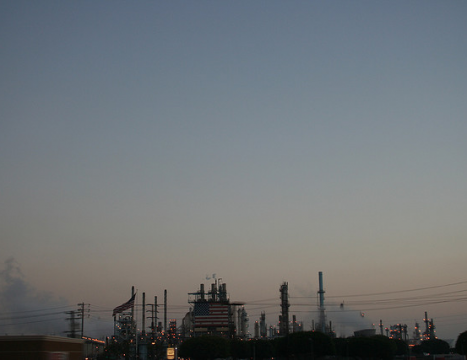
Many businesses and some environmentalists have argued that forcing reductions in carbon emissions through a free market trading program will cause industry to move out-of-state and hurt poorer communities, respectively. But the California Air Resources Board has voted unanimously to enact such a cap-and-trade program that is expected to cover 85 percent of the state’s emission sources -- compelled by the argument that it will be healthier for both the economy and environment.
“To be successful over the long-term, this program is going to have to deliver demonstrable benefits for Californians -- benefits that we (not only) can see in terms of the environment and air quality, but also benefits that we can see in terms of economic development, job creation, cleaner energy and transportation infrastructure,” says Mary Nichols, chair of the California board, as quoted by renewablesbiz.com.
Enacting the cap-and-trade provision is an extension of the 2006 state law that requires about 600 facilities there to reduce their carbon emissions to 1990 levels by 2020. That’s roughly a 25 percent cut. Next year, the state will begin auctioning off some of the credits, although it will give away 90 percent of them to get the trading scheme off the ground. By 2016, it will be in full force and is expected to be $10 billion market -- the biggest in North America.
A cap-and-trade system is one in which companies that emit fewer allowed emissions can earn credits. Those credits can be banked or sold to other entities that are unable to meet the requirements. As the ceilings come down, overall emissions then drop.
 All world news
No published comments
Login to comment
 Interview
 Full text
 Events


