

|

|

Sign up for our newsletter to receive the latest news and information from publics.bg


News
From Bulgaria


 27.05.2014 17:54
© south-stream.info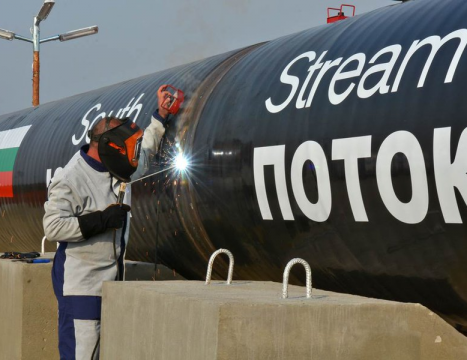
A consortium of Russia’s Stroitransgaz and five Bulgarian companies united under the name “Gasproekt Yug” will build the Bulgarian part of South Stream gas pipeline. The Bulgarian companies under “Gasproekt Yug” are “Industrial Construction Holding”, “Technoexportstroy”, “Glavbolgarstroy”, “Ponsstroy Engineering” and “PST Holding”. The pipeline is expected to boost the security of supply of Bulgaria which currently relies on just one route pringing Russian gas via Ukraine and Romania.
The winning Bulgarian-Russian Stroytransgas Consortium DZZD in the much scrutinized tender procedure was announced Tuesday by representatives of South Stream Bulgaria AD, a Bulgarian-Russian equal participation joint-venture managing the project in Bulgaria. Launched in the day of the formal start of the project in Bulgaria on October 31, 2013, with just two weeks for candidates to submit their letters of intent, the procedure was cancelled and re-started two months later.
Just one winner for all activities
“A total of 11 consortia submitted their offers in the first phase of the selection procedure. Only three of them – Stroytransgaz Consortium DZZD, JV Bonnati-CCC-Gastroymontaj, “HABAU Hoch-und Tiefbaugesellschaft m.b.H, Max Streicher GmbH&Co., Kommanditgesellschaft auf Aktien, ENergoremont Holding AD” were allowed to the second stage which started in January 2014”, Vladimir Inkov of the state-owned Bulgarian Energy Holding stated.
Leonid Chugunov, chief of the South Stream department at Gazprom, explained that the tender procedure was aimed at selecting one candidate “that is strong enough and hasd the expertise to carry out all the planning, equipment and material delivery and construction works for the complex project that South Stream is”.
According to the representatives of South Stream Bulgaria, some 110 Bulgarian companies will be contracted for the construction of the pipeline, creating direct employment for 7500 people and for around 100,000 in the country.
“The project will have a huge impact on employment in Northern Bulgaria, sadly known as one of the poorest regions in Europe. Furthermore Bulgaria will benefit from transit fees, taxes and excise duties as early as 2016”, Vladimir Inkov said.
First gas to flow in less than two years
While construction of the onshore part of the pipeline in Bulgaria is scheduled for 2014, the first quantities of gas should be delivered in the fourth quarter of 2015, Gazprom representatives announced. The planned annual flow of 15,6 billion cub. m/year will be divided between Bulgaria and transit aimed for Greece and Turkey. In 2016 the quantities will be increased to 45 bn cub. m, reaching the planned maximum capacity of 63 bn cub. m in 2018.
The price of the Bulgarian stretch remains EUR 3.5 bn
Despite declining to state a particular price for the entire project in Bulgaria citing “trade secret”, South Stream Bulgaria AD representatives said that the cost of the pipeline would remain the same or lower than the indicative price mentioned in the first tender procedure in October 2013, which was EUR 3.5 m.
Bulgaria is yet to sign a transport agreement settling the exact transit fees it would obtain from South Stream. The Bulgarian Energy Holding which represents the country in the joint-venture said that it managed to secure “decent conditions” for a loan from Gazprom for the construction of the pipeline. Gazprom is to lend EUR 625 m at 2.45% interest. The Bulgarian Energy Holding will be exempt from paying the loan for the first five years, until the pipeline is constructed, while from 2019 onwards transit fees will cover the payments.
 All news from Bulgaria
 Interview
 Full text
 Events


