News

World news Bookmark and Share

14.02.2014 15:44
Electricity System Operators of Serbia and Kosovo Work Towards Normalising Bilateral Relations
Based on its provisions, further arrangements will be made to ensure that KOSTT joins ENTSO-E as an independent control area, participates in the European-wide compensation mechanism among transmission system operators (ITC) and effectively allocates capacities on its interconnectors with neighbouring Contracting Parties of the Energy Community
AUTHOR: publics.bg


  • © energy-community.org

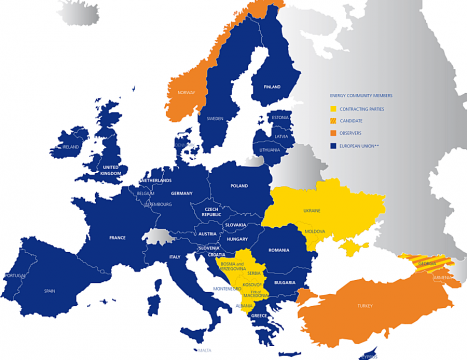
A Framework Agreement governing the operational and commercial relations between EMS of Serbia and KOSTT of Kosovo has been signed by both companies’ general managers. The legally-binding Agreement constitutes a milestone in normalising the relations between the two electricity system operators. Based on its provisions, further arrangements will be made to ensure that KOSTT joins ENTSO-E as an independent control area, participates in the European-wide compensation mechanism among transmission system operators (ITC) and effectively allocates capacities on its interconnectors with neighbouring Contracting Parties of the Energy Community - Serbia, Albania, FYROM, Montenegro, Bosnia and Herzegovina. The Agreement is also likely to bring to an end a long-standing dispute between the Secretariat and Serbia in Case ECS-3/08 in the near future. KOSTT was licensed in 2006 under legislation promulgated by UNMIK to operate the transmission system within that Contracting Party. A set of bilateral agreements governing the relationship between KOSTT and EMS inter alia provides for mutual compensation for electricity transits for the purposes of the respective other party to and from third parties. With the application of multilateral Inter-TSO Compensation (ITC) Agreements in 2004, EMS ceased to compensate KOSTT for electricity transits. It does not forward to KOSTT the compensation received under the ITC Agreements. Furthermore, KOSTT does not receive the revenues from allocating transmission capacity on the interconnectors with the countries adjacent to UNMIK. That allocation is made by EMS.

The negotiations of the Framework Agreement were facilitated by the Secretariat’s Deputy Director Dirk Buschle and his team together with experts from the European Commission. Director Janez Kopač of the Secretariat expressed his satisfaction about the signature: “This Agreement is not only of bilateral relevance. It will unblock many serious obstacles which so far have prevented regional integration of the electricity markets in South East Europe.” 


TAGS: Serbia | Kosovo | Energy Community | KOSTT | EMS | Electricity System Operators | Europe | transmission capacity | TSO 


All world news

No published comments
Login to comment


Interview

20.03.2022  Teodor Bobochikov, Managing Partner, V-Ridium
Energy Transformation – Trends and drivers
Full text

Events

No records in this category!

Poll

What kind of transport do you use to get to work?


We use cookies to ensure we give you the best browsing experience on our website. Find out more on how we use cookies and how you can change your settings.

Cookies

What are cookies ?

A cookie is a small text file that a website saves on your computer or mobile device when you visit the site. Cookies are widely used in order to make websites work, or work more efficiently, as well as to provide information to the owners of the site.

How do we use cookies?

Website use Google Analytics, a web analytics service provided by Google, Inc. ("Google") to help analyse the use of this website. For this purpose, Google Analytics uses"cookies", which are text files placed on your computer.

The information generated by the cookies about your use of this website - standard internet log information (including your IP address) and visitor behaviour information in an anonymous form - will be transmitted to and stored by Google including on servers in the United States. Google will anonymize the information sent by removing the last octet of your IP address prior to its storage.

According to Google Analytics terms of service, Google will use this information for the purpose of evaluating your use of the website and compiling reports on website activity.

We not use, and not allow any third party to use the statistical analytics tool to track or to collect any personally identifiable information of visitors to this site. Google may transfer the information collected by Google Analytics to third parties where required to do so by law, or where such third parties process the information on Google`s behalf.

According to Google Analytics terms of service, Google will not associate your IP address with any other data held by Google.

You may refuse the use of Google Analytics cookies by downloading and installing Google Analytics Opt-out Browser Add-on. The add-on communicates with the Google Analytics JavaScript (ga.js) to indicate that information about the website visit should not be sent to Google Analytics.

Cookies are also used to record if you have agreed (or not) to our use of cookies on this site, so that you are not asked the question every time you visit the site.

Google Analytics Opt-out Browser Add-on

How to control cookies?

You can control and/or delete cookies as you wish. You can delete all cookies that are already on your computer and you can set most browsers to prevent them from being placed.

All about cookies

Managing cookies in your browser

Most browsers allow you to:
  • see what cookies you have got and delete them on an individual basis
  • block third party cookies
  • block cookies from particular sites
  • block all cookies from being set
  • delete all cookies when you close your browser

If you chose to delete cookies, you should be aware that any preferences will be lost. Also, if you block cookies completely many websites (including ours) will not work properly and webcasts will not work at all. For these reasons, we do not recommend turning cookies off when using our webcasting services.
X
} catch(err) {}