

|

|

Online Newsletter
Sign up for our newsletter to receive the latest news and information from publics.bg
Sign up for our newsletter to receive the latest news and information from publics.bg


News
From Bulgaria


 15.07.2013 16:36
Varna Citizens Ready to Protest, as South Stream Construction Start Approaches
Residents of Varna, awaiting a discussion with South Stream representatives, alarm that the pipeline and its compressor station would be built just 1 km away from their homes
© south-stream.info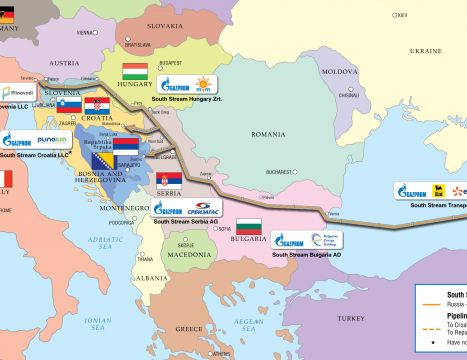
Citizens of Bulgaria’s 3rd largest city are probably eagerly awaiting the meeting with the management of the project company for the construction of Russia-lead gas pipeline South Stream. As reported by a number of Bulgarian media, the direct dialogue is planned for tomorrow, July 16th, in the seaside city, as some 40,000 inhabitants of the area where the pipe is supposed to emerge from the Black Sea said they are ready for civil unrest over environmental and health concerns.
Sticking to the construction plan
On July 8 Gazprom’s CEO Alexey Miller was received in Sofia for high-level talks with Bulgarian PM Plamen Oresharski and energy minister Dragomir Stoinev. The latter reassured Miller that the South Stream project, remains of strategic importance for the government. Miller then explained that the first quantities are expected to flow towards Bulgaria in December 2015.
EUR 3.1 billion is set aside for the Bulgarian stretch of the pipeline. Reportedly EUR 1.55 bn will be secured by a Russian loan to Bulgaria with an 8% interest a year in order to avoid budget spending. In return, Bulgaria will have to give up transit fees for a period of 15 years.
Construction of the Bulgarian stretch of the pipeline was delayed until end-2013, or early 2014, due to lack of construction permit and approved environmental impact assessment, which added up to already existing concerns of local inhabitants.
Health and environmental concerns
Noise and air pollution from both construction works and operation of the pipeline and compressor station, planned to be built just 1-2 kilometers away from the most southern parts of the city’s most southern suburbs, are among the main concerns of locals. The entry point on Bulgarian territory is pinned at Pasha Dere beach – a wild, spared from construction beach, which belongs to the protected areas of EU-wide network Natura 2000. Some 10 decares of woods in the vicinity would be cut down and 30,000 tonnes of cement would be poured in zones marked as green space in Varna’s detailed development plant, citizens alarmed.
Last, but not least, locals felt they were underestimated by the environmental impact assessment which allegedly referred to between 11,500 and some 40,000 residents during the summer season as “an unimportant portion of the population”.
Citizens expressed their concerns in an open letter to Gazprom’s Alexey Miller, vowing to protest if they do not receive answers to the questions posed in it:
• Was Mr. Alexey Miller, as CEO of Gazprom, aware that the pipeline would pass close to people’s homes?
• Which Bulgarian institution allowed Gazporm to build the planned gas pipeline in immediate proximity to residential areas and directly through protected natural zones?
• Was the project coordinated with Varna municipality and inhabitants directly affected by it?
• Why was it noted in the project that the compressor station and the pipeline itself stand 11 km away from Varna, when in fact the southern suburbs are as close as 1 km away?
• Why did Bulgarian authorities not make a statement regarding the route of the pipeline on Bulgarian, and therefore European, territory?
• Is there any guarantee that the compressor station and the receiving terminal would comply with EU rules about noise reduction and underground laying?
• Would Mr. Miller take any actions towards selecting an uninhabited area further south from Varna’s suburbs for the receiving terminal and the compressor station?
Energy diversification – priority for Bulgaria
Triggered by the gas crisis of 2009, diversification seems ever so elusive for Bulgaria which still relies on a single pipeline bringing Russian gas through Ukraine and Romania. During the 2009 gas dispute between Russia and Ukraine, Bulgaria, among other Balkan countries dependent on Russian imports, was left without gas supply, relying only on quantities in the Chiren gas storage.
As the future of rivaling EU-backed Nabucco West pipeline is unclear after it failed to secure quantities from Azeri gas field Shah Deniz II which preferred the Trans Adriatic Pipeline instead, Bulgaria's government lead by socialist party BSP seems eager to speed up the diversification of gas supply to the country. It is important to note that the South Stream project was also endorsed by previous government of right-centrist party GERB, as a means for diversification, along with developping local gas production and interconnectors with neighbouring countries. Rumors of Bulgarian participation in a new Greek gas terminal also cirulated after the 2009 gas crisis.
As protests in February 2013 lead to the resignation of the GERB government, caretaker prime-minister Marin Raikov called for a more in-debt analysis of Bulgaria's current energy situation and a re-examination of the country’s perspectives on South Stream.
 All news from Bulgaria
No published comments
Login to comment
 Interview
 Full text
 Events


