

|

|

Sign up for our newsletter to receive the latest news and information from publics.bg


Interviews


 11.03.2013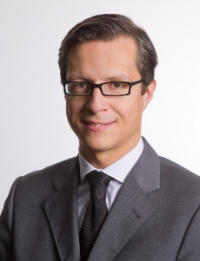
In two consecutive interviews of Publics.bg and Utilities Magazine, you can see the points of view of the two competing companies for Shah Deniz II gas. In addition to the interview with Mr. Christian Dolezal, you can also read on our website the interview with Mr. Michael Hoffmann (Trans Adriatic Pipeline).
______________
Mr. Dolezal, what are the recent developments related to Nabucco?
- We have been working extremely intensively on the last important development steps for the project. We signed the cooperation agreement with Shah Deniz consortium on 18-th January, which includes the possibility for BP, Total, Statoil, and SOCAR to step in our project with 50% of the shares after the selection of the project in the end of June. We are in a constant process of negotiations with the SD consortium after that agreement and we are now working on a final offer to Shah Deniz. This is going to be summarized in a pipeline decision-support package which we will submit to the consortium at the end of March.
It is very important for us, that there is a huge progress in Bulgaria – we have now all 30 public hearings going on from February to March, an intensive period with constructive response, we are waiting now for the final environmental permit from authorities soon. We have already all permits in Hungary, we submitted already all the papers in Romania, also in Austria.
We signed a Memorandum of Understanding with TANAP project that enables us to align the technical interconnections with them, because we have an in-depth knowledge for the Turkish pipeline section.
We are in a very good shape, we are fit to bring additional value to the producers. We offer direct and shortest access to a big consumer market in Southern Eastern Europe and Western Europe. Nabucco offers access to the most liquid gas hub in Central Europe – Baumgarten. We are very convinced that we offer the best package. We are now expecting a clear decision by the SDII consortium by the end of June.
In comparison with the competing project – TAP, what are the other advantages of Nabucco? What about the costs of construction?
- First of all, we have the direct and shortest route to a 60-million consumers market in South-Eastern Europe and via Baumgarten a direct exit to 500 million consumers in Europe. Our CAPEX costs are now lower with the shortened route of 1300 km and very much comparable with TAP. We have the advantage of not having an expensive offshore section. We are constantly optimizing the structure.
Also, 60% of our pipeline will follow the route of existing pipelines, which also eases up the project. In this respect, we offer a very comprehensive package.
Is there a possibility for both projects to be built together?
- This is a decision that has to be made by the market at the end of the day. We know there is a lot of gas around in the Caspian region, it has to do mostly with what is expected in the market in the long term. I do not want to speculate now “what if” questions. We will be the most competitive project at the end of June and see after that what producers decide.
What are the current technical details of the project in terms of capacity?
- We are scalable and the capacities that we foresee start with 10 bcm and go up to 23 bcm with a 48 inch pipe. This is the scope and the scale that we now work with.
There is an exemption for 50% of Nabucco’s capacity and a proposed exemption of 100% for TAP’s capacity. Do you believe this is a disadvantage for your project?
- I have to mention, that we have the exemption already and for the other project it is obviously still work in progress. We are offering with our exemption transportation services to third parties therefore we are not an exclusive club. We expect an even playing field in that respect.
So, for instance, Bulgaria can transport through Nabucco part of the 1 bcm Azeri gas that it has agreed before?
- Exactly. It gives all the transportation options for SEE countries.
What are the capacities that you expect ending up in Baumgarten after the consumption in between?
- This will be defined by the market. Results will be available after the open season was executed.
What is the position of your project in terms of policy and energy policy in Europe? On one hand, the crisis in Greece needs solutions, but the countries in your route also need foreign investments. Is this part of the equation?
- It is very important that the markets for investors are stable. I think that our Southern corridor markets are very stable ones and managed to get through the euro crisis well. Nabucco will boost the economic development in the transit countries and in the whole region. Infrastructure is a first mover and other businesses and growth will follow.
What will be the economic effect of Nabucco in Bulgaria in terms of investment, jobs, etc.?
- If we are able to invest close to one billion Euro in Bulgaria, there always is a multiplier effect for the economy. You create jobs directly with the construction of the pipeline, but more important are the indirect jobs created with the local economies which benefit from that. There is also a long-term effect with new gas-related businesses moving in to the country and positive investment climate that is going to be established. This effect is a big benefit.
Bulgaria triggered this topic on a political level and I think this is a smart policy, because Bulgaria is a gate to Europe now, it is clearly the first EU country that would receive Azeri gas via Nabucco. With Nabucco in place gas supply for Bulgaria will be secure and stable. This is also an important aspect of Nabucco – in addition to bringing return to shareholders and producers.
In terms of investment, what could be the share of financing from Bulgarian Energy Holding?
- This is very much dependent on the shares split. It is currently in the move, as we have the possibility of Shah Deniz shareholders stepping in. The rest 50% will be reserved for transit countries and other interested parties, so this has to be seen. The more shareholders in the project, the less equity from each of them will be needed. The investment share will be for sure a very feasible and moderate one.
Is there something Bulgaria needs to do in order to further support the process?
- Bulgaria is active at the political committee meetings, committed and supportive. There is no reason to assume that this proactive mutual beneficial approach will change.
______________
Christian Dolezal is the Head of Communications and Public Affairs for NABUCCO Gas Pipeline International GmbH, a position he has held since 2009. He studied Journalism in Vienna and Paris and Economy in London. Prior to his current assignment he carried out various functions as Spokesperson and Head of Communication in the Austrian Government, the Vienna Chamber of Commerce and OMV Gas & Power, Logistics business.
Mr. Dolezal is a member of the Bundesverband Deutscher Pressesprecher and the European Association of Communication Directors (EADC). He has also been lecturing at the University of Applied Sciences in Vienna since 2006.
 All interviews
 Interview
 Full text
 Events


