

|

|

Online Newsletter
Sign up for our newsletter to receive the latest news and information from publics.bg
Sign up for our newsletter to receive the latest news and information from publics.bg


News
World news


 04.02.2013 12:54
Germany Tightens Up Shale Gas Rules
However, EU Energy Commissioner Guenther Oettinger urged Germany to keep an open mind on fracking, saying the EU wanted to develop the practice, to produce at least enough gas to replace its own dwindling conventional supplies and to avoid becoming more import-dependent
© SkyTruth@flickr.com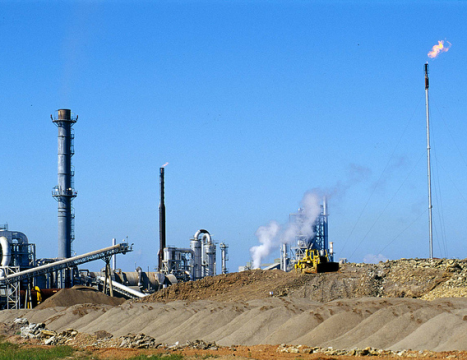
Germany's upper house of parliament passed a resolution on Friday urging Chancellor Angela Merkel's government to tighten the rules for controversial modern drilling techniques, or fracking, for unconventional gas.
The resolution piles the pressure on the government to draw up clear rules for the practice, which critics say could increase seismic risks and even pollute drinking water.
The Bundesrat upper house, which represents Germany's 16 federal states, passed a resolution that demands an assessment of the environmental impact of fracking and public consultation before it can be started.
"This is about rejecting the use of this technology until the risks are cleared up 100 percent," Torsten Albig, the Social Democrat (SPD) premier of the northern state of Schleswig Holstein, said in the Bundesrat, adding peoples' safety had to be the top priority.
However, EU Energy Commissioner Guenther Oettinger urged Germany to keep an open mind on fracking, saying the EU wanted to develop the practice, to produce at least enough gas to replace its own dwindling conventional supplies and to avoid becoming more import-dependent.
Energy costs rather than labour costs were now a decisive factor for some energy-intensive industries in deciding where to set up, he told a conference in Munich, warning that Europe could face deindustrialisation, Reuters reported.
In the United States, new processes have created a shale gas boom in recent years, freeing the country of importing needs and changing gas flows in the world market.
Germany's powerful industrial lobby has complained that companies may lose their competitive edge compared to U.S. rivals because of the boom which has led to a sharp fall in gas prices there.
The resolution was proposed by states run by the opposition SPD and Greens in the house where Merkel's centre-right coalition do not have majority.
Permits for fracking, issued by individual states, may only be granted if it is absolutely clear that there is no risk of the water supply being affected, according to the resolution.
 All world news
No published comments
Login to comment
 Interview
 Full text
 Events


