

|

|

Sign up for our newsletter to receive the latest news and information from publics.bg


Interviews


 22.11.2010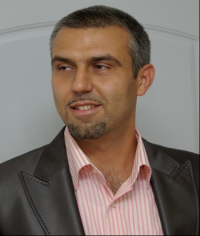
Mr. Minkov, what are the main tendencies you have been witnessing in human capital development in energy industry in recent years?
- Providing a general overview of the whole energy sector is an ambitious task – the industry comprises of a variety of specific activities, which require abundance of different competencies as well as detailed analysis. One thing is clear: the sector has a key role in the development of Bulgarian economy, involves considerable investments and will certainly develop in the future. A major problem, witnessed quite often recently, is the lack of capable specialists, adequately trained to fit in the new reality, especially in the area of project management.
What are your expectations regarding the energy industry expert market, having in mind the large and small scale energy projects in the pipeline?
- We observe a tendency to demand of qualified and experienced specialists from more developed markets. The energy sector is more conservative in this respect, unlike companies in the fast moving consumer goods or the IT sectors. Our company has successfully facilitated the hiring of top specialists for the energy industry from Western Europe - people who have worked on successful projects similar in scale to those our clients are planning to launch in Bulgaria.
What are the most suitable forms of experience and knowledge exchange between energy industry experts and companies, which you would recommend to colleagues from the sector?
- It is difficult to give a straightforward answer. It is best to combine different approaches and to be flexible, especially in the current insecure and quite dynamic business environment. There is a tendency for companies to switch from using the services of big consulting organisations for separate projects to attracting top managers and key experts from abroad, usually professionals with considerable experience in projects similar to those our clients want to start here. It isn’t necessary to start over from scratch again and again. Each project has already been completed in another country in a more advanced economic stage than ours.
We shouldn’t overlook the fact that long-term employment of top specialists helps a company attract know-how and allows for business culture exchange. This approach is much cheaper than others and the hired specialists are directly engaged in implementing best practices and in achieving particular results. It also seems that when a whole group of expatriates is hired, they get used to our cultural differences more easily and feel motivated for a longer stay in the country. I wouldn’t say that Bulgaria totally lacks good specialists, it is just that they are limited in number and we are still to face cases that other countries have already solved successfully. In addition, we will benefit from being more open to exchange of experts with other countries in the EU, and not only. This inevitably leads to experience and culture exchange and has a positive effect on professional competition in the country by stimulating the achievement of better results.
This November Stanton Chase Bulgaria and Public Services (www.publics.bg) start a survey among managers and experts in the energy sector. What are your expectations of this project?
- Our goal as consultants is to support the sector in identifying needs, especially in the area of human capital, that will enhance its effective progress. We have all been witnessing the lack of a relevant industry oriented education in the country in recent years. Numerous opportunities for projects in the sector are already available. That is why we need to find and/ or train capable operational experts in the area of project management. This profession covers a variety of functions and requires a proper theoretical background and practical experience of a technical, engineering, economic and financial nature; last, but not least, it involves experience in technical staff management. Foreign languages (especially English) are almost always a must. This gives but a small idea how complicated the task of training or identifying such specialists is.
To my mind, the energy industry projects in the pipeline, including renewable energy sources, present an opening for hiring top experts from abroad and placing young professionals side by side with them thus creating a chance for unique training on the job for the local staff. Employees of long standing should be equally engaged in these teams, notwithstanding their experience of different or previous technologies. In my opinion, this is the way to provide for the necessary staff continuity and sustainable development both of companies in the sector and their personnel. I hope that all professionals in the energy industry will take active part in our endeavour to help us make it work. This survey is meant to be the beginning of a series of initiatives as we aim to outline particular details and actions to be taken, including the identification of those specific key competencies that can and need to be developed.
___________________
Dobromir Minkov started his professional career in the energy business with Shell Gas Bulgaria, part of the Royal Dutch/Shell Group, where he supervised diverse industrial projects throughout the country. Then he spent four years as а Division Manager of Oil, Gas and Chemicals Services for SGS Bulgaria, an affiliate the Swiss-based SGS S.A., the world leader in inspection and certification. In this position, Dobromir worked on different projects in the area of business development, including laboratory outsourcing.
Towards the end of 2007, Dobromir decided to alter his career path and pursue a more people-oriented business opportunity with the executive search team of Stanton Chase Bulgaria. There Dobromir started facing the challenges associated with finding the proper candidates to fill senior positions within Bulgaria's emerging economy.
As a Principal Consultant, Dobromir has run successfully several projects for attracting expat top managers and professionals in Bulgaria. He considers the experience as an opportunity to support the company’s clients in the Industrial & Energy sectors in reaching global and EU standards of management & know-how. He also has successful projects for the placement of top managers within the banking sector.
Dobromir holds a Master of Science degree in Petroleum Engineering from the University of Mining and Geology, Sofia and a Master of Business Administration degree in Financial Management from the City University of Seattle in Bulgaria.
 All interviews
 Interview
 Full text
 Events


